Analysis
Beyond Neoliberalism?
In search of programs, strategies, and coalitions for a new world order
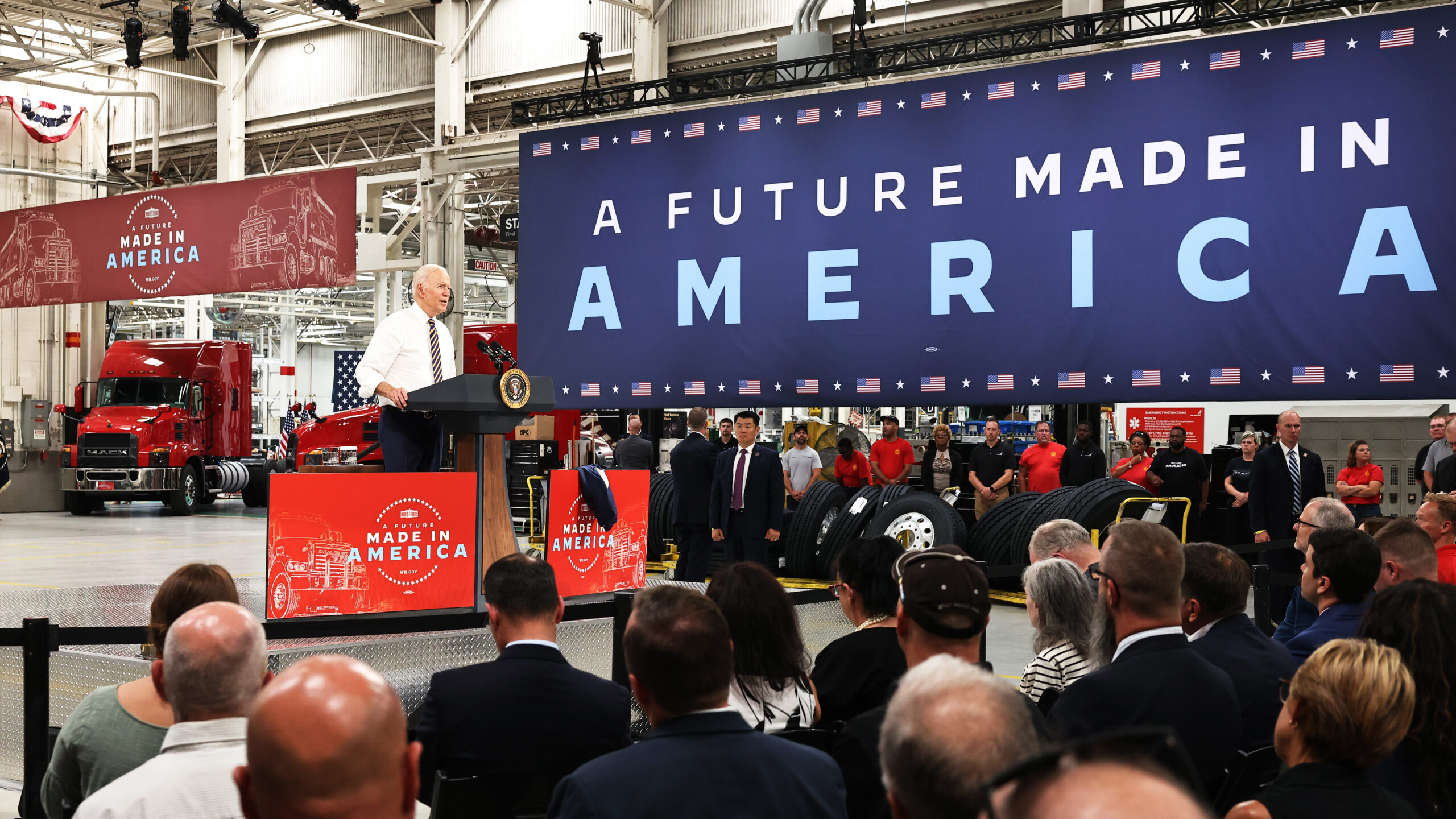
The globalization that defined the neoliberal period was imagined at a remove from the material world: weightless supply chains composed of transparent logistics networks, just-in-time production and delivery amounting to a seamless world of efficiency and complexity. Neoliberalism’s crisis of legitimacy began with the financial crisis in 2008, but the sudden re-entry of physical problems introduced by the Covid-19 shock—what we called the “geopolitics of stuff” back in 2022—solidified the rebuke.
Emblematic of the shift was President Joe Biden’s use of a Korean War-era authority—the Defense Production Act (DPA)—to airlift twenty-seven million tins of goat milk-based baby formula from Australia to the US, to fill a supply gap caused by the shuttering of a Michigan factory caused by the shuttering of a Michigan factory operated by operated by Abbott Nutrition. (The company, which shut the plantplant after its product was linked to two contamination-related deaths, had just increased its dividend to shareholders and announced a $5 billion share buyback program.) After being deployed to meet the nutritional needs of US newborns, the DPA was subsequently used to provide financing support for mining and processing of critical minerals from Australia, Canada, and the United States. From baby formula to mining supply chains, the state was back.
Neoliberalism’s demise has been well and widely proclaimed. Where market shaping policies were once dismissed with epithets like interventionism and “picking winners,” policy makers now talk openly about disciplining capital and industrial policy.
At a conference in Cambridge, UK, at the end of May, academics, think tankers, policymakers, and journalists convened to contemplate this new world “Beyond Neoliberalism.” The gathering was supported by the Hewlett Foundation—a central funder for a range of think tanks and intellectual efforts, many represented at the conference. The event’s stated ambition was to envision an expansive new political order, partaking in a process that co-convener Gary Gerstle described in The Rise and Fall of the Neoliberal Order. Constructing a new order, he wrote: “requires deep-pocketed donors (and political action committees) to invest in promising candidates over the long term; the establishment of think tanks and policy networks to turn political ideas into actionable programs; a rising political party able to consistently win over multiple electoral constituencies; a capacity to shape political opinion both at the highest levels (the Supreme Court) and across popular print and broadcast media; and a moral perspective able to inspire voters with visions of the good life. Political orders, in other words, are complex projects that require advances across a broad front.”
The theme of advancements and setbacks loomed large at the conference. Neoliberalism might be declared dead, but how to assess any order stepping into its place? The Democrats’ Bidenomics policy approach was understood as a key episode in the process of asserting a new political order, drawing up new parameters for the relationships of state, society, and market—all of which are now rapidly unravelling at the hand of MAGAnomics.
Central tenets of Bidenomics’ post-neoliberal agenda can be found in the proposal for “Rewriting the rules” created in a Roosevelt Institute workshop led by Joseph Stiglitz in 2015.
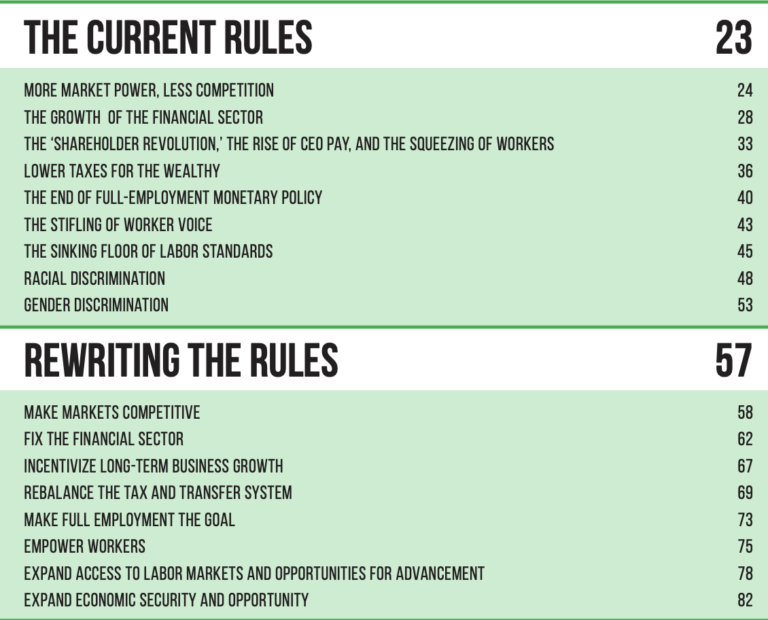
After November 2024, the conference asked, what prospects for continuing to rewrite the rules? The greatest present threat to the world economy is the GOP’s MAGA policy agenda, and so the Democrats’ future direction represents the only window for the US to stop being a source of disorder in the world. Can a stable American politics ever be constructed to be a responsible actor in the twenty-first century—on multilateralism, trade, climate, debt, security? While the rest of the world has an existential stake in the Democratic Party’s ability to construct an alternative political coalition and economic program in the US, already nations are working around and without the US.
Industrial policy
The passage of the Inflation Reduction Act sparked a new enthusiasm among policymakers for state capacity to build or develop selected industries. By the end of 2022, Europe was scrambling to pull together a response, and Japan, Canada, Korea, and Australia had announced their own programs. Meanwhile, large developing countries adopted a position of strategic non-alignment as a bargaining chip for trade and technology deals.

In a Roosevelt Institute report, Todd Tucker (present at the Cambridge conference) traced the resurgence of industrial policy back to 2015. Two major initiatives launched that year: China released its Made in China 2025 report, with numerical targets and goals for superior manufacturing of advanced technology and clean tech, and the European Commission committed to use the European Investment Bank for industrial policy in the form of the European Fund for Strategic Investment. The EIB was empowered to use new and extended risk-bearing instruments, rather than just grants, and reported to have mobilized EUR500bn of investment in its five-year program (now InvestEU).

Throughout the conference, several speakers pointed out the degree of coordination that implementing successful industrial policy requires, including the creative orchestration of disparate policy tools. Ha-Joon Chang described South Korea’s car import bans that were in place until 1988 as it pursued a Hamilton-inspired strategy of localising production, supported by state banks; Jazmin Sierra explained how the Brazilian development bank BNDES developed Brazil’s multinational champions; Angela Zhang set out China’s use of anti-trust as an instrument of both industrial policy and geopolitics.
Why did the US turn towards industrial policy, which was resourceful in its use of novel and long-forgotten mechanisms, find it so hard to win at the polls? One explanation is simply time. “Industrial strategy is about thinking long term: which sectors, which tools are you going to use to sustain livelihoods, production, value creation in the future?” explained economist Diane Coyle. She noted the UK Labour government’s ability to effect industrial policy was hampered by a loss of state capacity and domestic skill, particularly in engineering capabilities which were offshored over decades.
The misalignment of market-shaping industrial policy and electoral timelines sits atop a deeper impasse gripping the politics of the richer nations of the global North: the crisis of legitimacy faced by a ruling class that has demonstrably failed to improve the living conditions of the majority. Sacha Hilhorst shared her field research on political attitudes in two northern English towns that both went for Brexit, turned from Labour to the Tories, and are growth areas for the far-right Reform Party. The dominant theme was that legitimacy crisis. She encountered a resigned cynicism about politics, with politicians only in it for themselves, and lacking even a bare alignment with their constituents own values, like work ethic: “If you worked like me, I would respect you.” And yet, predominating over narratives blaming immigrants for lost work was the cost of living crisis: food, rent, housing, water, and utilities. This is the terrain on which coalition-building for a progressive industrial policy must situate itself going forward.
The South’s post-neoliberalism is different
With neoliberalism weakened among wealthy countries, it nevertheless persists in the domestic politics of many countries, especially in the global South. The South, we argue, is not having a “post-neoliberal” moment, for two reasons.
Firstly, the ideology of neoliberalism never took organic root across societies in the first place. Much more so, it was an economic policy suite imposed through the Washington Consensus, and continues to be—by the IMF, liquidity safety net hierarchies, capital markets, and ratings agencies. In spite of and alongside these constraints, many developing countries routinely acted as promoters and owners of capital, whether through state-owned enterprises, especially in dollar-earning extractive industries, or through development banks like Brazil’s enormous BNDES.
Secondly, where neoliberalism was pragmatically adopted, unlike in the global North, it often legitimated itself by actually delivering economic growth. Plainly: the middle classes of middle income countries have been buoyed by globalization, while their counterparts in wealthy countries have stagnated.
Authoritarian populism in middle income democracies like Brazil and India has therefore not been led by the economic losers of neoliberal globalization (low education, low income, rural) as in the OECD, but by its elite winners (high education, high income, urban). This is “retrenchment populism,” as the sociologist Patrick Heller has argued, because it is in reaction to a previous democratic deepening of rights and social inclusion led by left-reformist party alliances.
The new world order?
With the US asserting its raw power-political project in the international sphere, the question is how states create a post-neoliberal international order. Is the end of US-led order good or bad for other countries? The ritualized wisdom of US primacists is that without a liberal benevolent hegemon, the “jungle grows back” and countries face more wars from predatory states thriving in a power-vacuum.
“Chaos can be good for developing countries,” Jayati Ghosh declared at the public plenary on the first night of the conference. Gains by many developing countries were made in past eras of instability, she argued, citing Korea in the 1970s, when a hegemon was unable to enforce its rules. In conversation with us, Ghosh pointed out that the US has not delivered the global public goods that are expected of a hegemon: stable export markets, a global financial safety net, and liquidity in crises. “They don’t do any of that,” she said. “Instead what they have done is created extreme degrees of dependence, in which most decisions and legal international architecture are in favour of large multinational capital, especially that based in the US.”
Now, with the rules of the game changed and conventions upended, “developing countries have an option to think of a different plan—they’re forced to go to plan B. They can move away from export-led development, towards domestic autonomous industrialisation, towards the development of new sectors.” She sees hope in multilateral coalitions pushing for a fairer global tax system that taxes the ultrarich and multinational corporations and in debtors’ coalitions.
But such hope confronts a grim landscape. In a pre-2024 election essay, Andrew Elrod contended that the advancements in progressive policy made by Bidenomics were wrapped up in a synthesis of defense industry corporate interests, whose strength would outlast the green tech targeted tax credit system and any non-military expansions of state capacity, labor strength, or social welfare. So far, this much is proving to be true, and part of a global trend.
Neoliberalism was born in the Cold War and dominated the globe as an American project of the unipolar moment. If we are in a “post” period, multipolarity and the proliferation of war postures—in many cases now the political glue allowing the state to be brought in (from the US to Germany)—surely must be a part of the story. The global return of war and skyrocketing defense spending are defining features of the chaotic present. The Trumpist offer of a world drowned in oil has few takers as catastrophes accelerate; climate has increasingly become central to national economic and security strategies. By some accounts Bidenomics authorized a new industrial policy sprint around the globe—but the most consequential world-ordering results of that sprint will emerge from contestations that weren’t explored at Cambridge.
Meanwhile, the US is taking the state back out. In early 2025, whistleblowers at the baby food maker Abbot said safety procedures are once again being neglected. The FDA gave ProPublica journalists a bland “no comment”; the agency has lost 3,500 staff under the DOGE cuts.
Further Reading
Dispatch from Seville
Fracturing multilateralism at the Fourth International Conference on Financing for Development
What Was Bidenomics?
From Build Back Better to the national security synthesis
Industrial Transformations
Lessons from development economics for industrial policy design
Further Reading
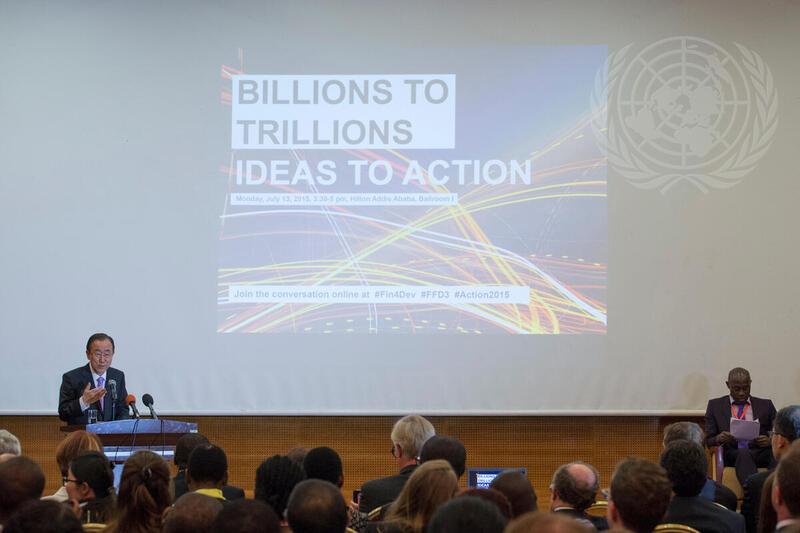
Dispatch from Seville
Fracturing multilateralism at the Fourth International Conference on Financing for Development
Multilateralism might be broken, but it is not dead yet. Or so we should conclude from the multilateral negotiations ahead of the fourth edition of...

What Was Bidenomics?
From Build Back Better to the national security synthesis
The Biden administration first embraced the slogan of “modern supply-side economics” six months before anyone uttered the phrase “Inflation Reduction Act.” Speaking before the World...

Industrial Transformations
Lessons from development economics for industrial policy design
The latest US experiment with industrial policy—exemplified by the Inflation Reduction Act, the CHIPS and Science Act, and the Infrastructure Investment and Jobs Act—has sparked...