December 4, 2025
Analysis
Uncategorized
Lithium Experiments
Chile’s mineral strategy and geopolitical realignment in the global energy transition
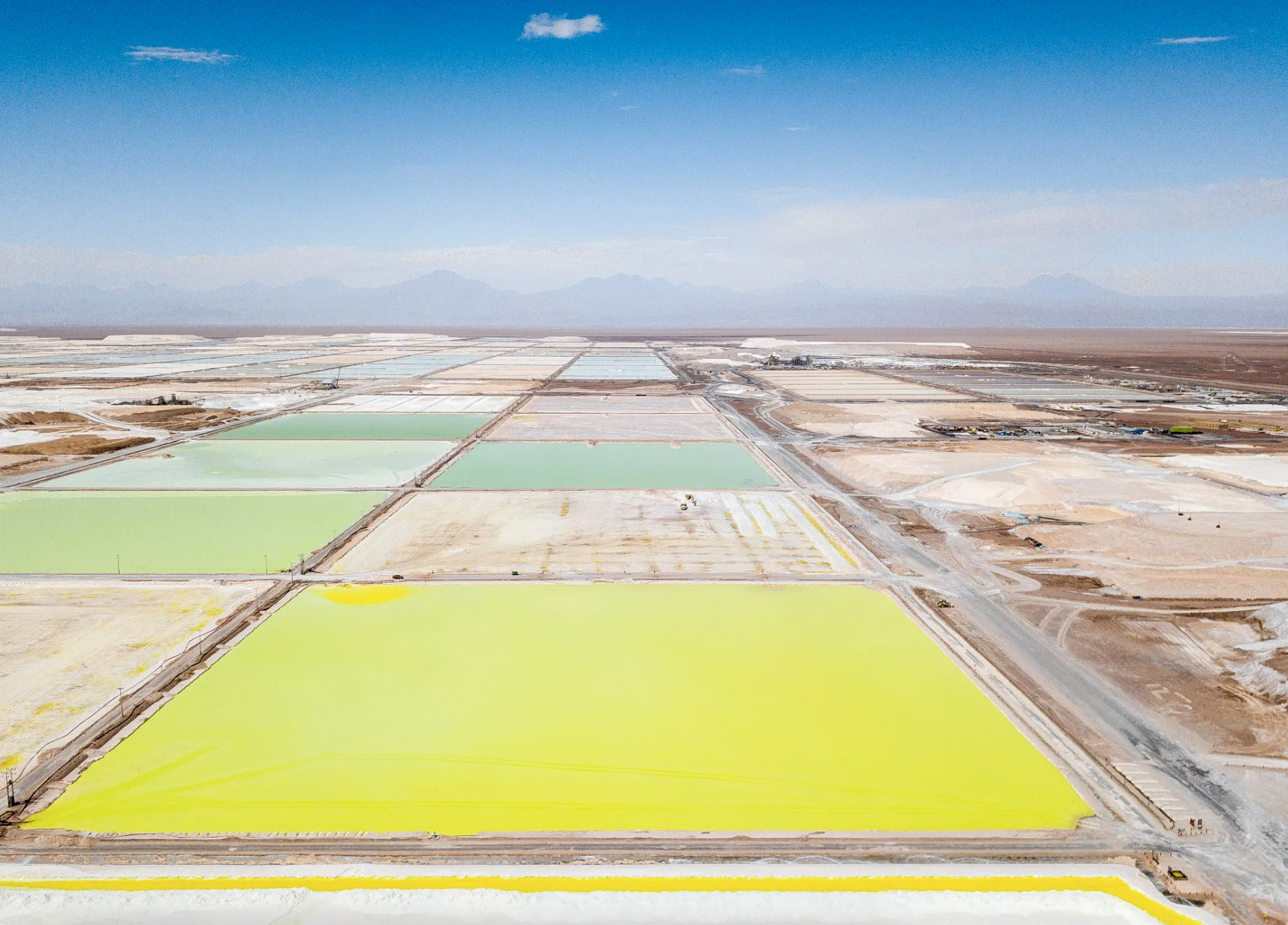
Chile holds 190 million metric tons of copper reserves—roughly 19 percent of the world’s total—and 9.3 million metric tons of lithium reserves, approximately 31 percent of global supply.1 U.S. Geological Survey, “Copper,” (<)em(>)Mineral Commodity Summaries 2025(<)/em(>) (January 2025). (<)a href='https://pubs.usgs.gov/periodicals/mcs2025/mcs2025-copper.pdf'(>)https://pubs.usgs.gov/periodicals/mcs2025/mcs2025-copper.pdf(<)/a(>); U.S. Geological Survey, “Lithium,” (<)em(>)Mineral Commodity Summaries 2025(<)/em(>) (January 2025). (<)a href='https://pubs.usgs.gov/periodicals/mcs2025/mcs2025-lithium.pdf'(>)https://pubs.usgs.gov/periodicals/mcs2025/mcs2025-lithium.pdf(<)/a(>) It boasts world-class solar radiation in the Atacama Desert and strong coastal winds. Although Chile plays a peripheral role in international affairs, these natural endowments, along with its stable democratic regime and strong state capacity, position it to integrate into emerging green supply chains and acquire greater geopolitical relevance amid global fragmentation. Domestically, Chile has the capacity to increase green energy generation from 19 percent to 40 percent between 2019 and 2024.2EMBER, “Chile surpasses 40 percent wind and solar for the first time in December.” (January 2025). https://ember-energy.org/latest-updates/chile-surpasses-40-wind-and-solar-for-the-first-time-in-december/
While the resource base and capacity exist, Santiago’s challenge lies in leveraging these advantages to reignite a stagnating economy through value-added production and export diversification. Since democratization in the 1990s, Chilean governments have increasingly broken with free market orthodoxy to increase value-added processing in lithium and copper, while making ambitious but increasingly uncertain bets on green hydrogen. Additionally, Chile has begun to renegotiate investment terms with foreign firms to reconfigure relationships with major powers, seeking better positioning in the emerging multipolar order.
President Gabriel Boric (2022–2026) has been particularly assertive in embracing state-led development, mandating direct government participation throughout the lithium value chain and establishing joint ventures designed to capture greater rents from critical minerals. However, this strategy is not without its challenges. In May 2025, Chinese firms abandoned their lithium processing projects, while the Energy Ministry recently announced that Chile would downgrade its green hydrogen targets amid weakening global demand. These setbacks coincide with electoral uncertainty—the December election features two candidates across the spectrum questioning Mr. Boric’s strategy. Whether Chile’s industrial policies can survive remains an open question, one with implications for other resource-rich nations attempting similar transformations. The future of Chile’s state-led development model will be determined not solely by its domestic industrial policies, but also by the country’s ability to navigate strategic relations with the world’s great powers: the US and China. To succeed, Chile must both elevate its position in the global economic hierarchy and secure its role in the lithium value chain.
Industrial policy in Chile
Chile’s political economy is perhaps most widely known for its role as the guinea pig of “shock therapy”—a policy of deregulation, austerity, and privatization that devastated its economy and society. Less known, perhaps, is the history of industrial policy experimentation that preceded the 1970s. In the aftermath of the Great Depression, Chile, like much of Latin America, embarked on large-scale industrialization through import substitution. After a series of authoritarian interruptions destabilized its nascent democracy, a coalition of bourgeois and Marxist parties won the presidency in 1938. Led by the Radical Party, the Popular Front coalition created Chile’s developmental strategy, centered on the Corporación de Fomento de la Producción (CORFO).
CORFO directed investment into strategic sectors, including energy, steel, oil, and sugar refining, while providing technical and financial assistance to the private sector. The agency ranked among Latin America’s most autonomous and efficient development corporations, forming part of broader state-building efforts that incorporated and politically insulated engineers and technocrats within ministries, the comptroller’s office, and state-owned enterprises. This bureaucratic development had enduring effects, positioning Chile as a high-capacity state by regional standards—a legacy that differentiates Chile from most Latin American economies today.
Despite creating new industries and infrastructure, Chile’s developmental state yielded mixed economic results. Like much of the region, Chile implemented broad, indiscriminate protectionism rather than the selective approach advocated by the Economic Commission on Latin America and the Caribbean’s (ECLAC) Raúl Prebisch, who recommended replacing imports of consumer goods while maintaining imports of capital goods and strengthening the traditional export sector. Chile’s approach encountered challenges common across Latin America: persistent inflation, recurring balance of payments crises, widespread cronyism, insufficient domestic demand, and an inability to transition toward producing sophisticated goods.3Hirschman, Albert O. 1968. “The Political Economy of Import-Substituting Industrialization in Latin America.” (<)em(>)The Quarterly Journal of Economics(<)/em(>) 82(1): 1. doi:10.2307/1882243; O’Donnell, Guillermo. 1973. (<)em(>)Modernization and Bureaucratic-Authoritarianism: Studies in South American Politics(<)/em(>). Berkeley: Institute of International Studies, University of California.
The contested legacy of Chile’s past industrialization efforts has made it difficult for politicians and civil society to mobilize support for new industrial policy initiatives. But since the 1990s, there has been an increased urgency of finding a new economic model. After democratization, the center-left Concertación coalition governed for twenty years, slowly implementing redistributive policies while maintaining the authoritarian-era economic framework. Rather than restructuring the export-oriented model, these governments channeled growth into targeted social programs, significantly reducing poverty and improving health and education outcomes. The strategy generated impressive results—7 percent average annual GDP growth in the 1990s and 5 percent in the 2000s, measured in per capita terms to control for demographic changes.4Ibid. By the 2000s, Chile’s political and economic elites proudly announced that it had become Latin America’s highest GDP per capita economy. Chile emerged as a market-oriented counterexample to the state-led development models of the Asian Tigers.
Unlike East Asian economies, however, Chile’s economic growth in the early 2000s was largely driven by a commodity boom. Rapidly growing demand for copper from China and India drove a remarkable rise in Chile’s exports. Since the early 2010s, the fall of this boom has seen persistently declining growth rates.5Toni, Emiliano, Pablo Paniagua, and Patricio Órdenes. 2025. “Policy Changes and Growth Slowdown: Assessing Chile’s Lost Decade.” (<)em(>)Public Choice(<)/em(>). doi:10.1007/s11127-025-01318-w. Continued lackluster economic performance throughout the last decade and a half has brought forward a new pro-industrial policy coalition interested in reviving the legacy of the 1930s.
Green industrial strategies
For the first time since the 1960s, Chile’s government has begun to implement decisive sectoral policies. In 2024, President Gabriel Boric of the left-wing Frente Amplio launched the National Lithium Strategy, signaling the government’s intention to expand state involvement in economic development. His government aimed to climb the battery value chain by establishing domestic production of higher-value components, including cathode materials, anodes, and electrolytes. The lithium strategy mandates direct state participation throughout the entire lithium production cycle—from exploration and exploitation to manufacturing. Central to this plan was establishing a National Lithium Company designed to coordinate strategic joint ventures with private firms.
The strategy has sought to transform Chile’s traditionally extractive approach by developing upstream and downstream connections in the lithium value chain. On the upstream side, the government has sought to build expertise in advanced exploration and extraction technologies, hydrogeological modeling, renewable energy integration, and water treatment systems. Downstream initiatives focus on developing refinement processes for high-purity lithium compounds, manufacturing battery precursor materials, and potentially establishing early-stage battery production facilities. This integrated approach reflects the government’s determination to prevent lithium extraction from becoming an enclave economy—a persistent challenge that has limited economic benefits in many resource-rich nations.
As part of the National Lithium Strategy, Sociedad Química y Minera de Chile (Chemical and Mining Society of Chile, SQM), a firm holding concessions for lithium extraction, and Codelco, Chile’s state-owned copper mining company, established a landmark joint venture to exploit lithium in the Atacama salt flat in 2023.6 Since the Pinochet era (1973-1990), CORFO has allocated its strategic lithium concessions to SQM, an originally state-owned enterprise privatized in the mid-1980s. This partnership extends SQM’s lithium extraction rights in the Atacama region until 2060 while securing Codelco’s substantial position within Chile’s lithium industry. Notably, the agreement structure gives Codelco an initial minority stake that will progressively increase to a controlling stake (50 percent plus one share), signaling Chile’s determination to assert greater state control over its critical mineral resources. SQM and Albemarle (an American corporation) conduct the primary exploitation of the Atacama salt flat, one of the world’s largest lithium reserves.
The Codelco-SQM partnership operates through a phased joint venture structure in which SQM maintains general management control until 2030, after which Codelco assumes operational leadership through 2060. The arrangement, formalized through Codelco’s subsidiary Minera Tarar and SQM Salar, targets a cumulative additional production of 300,000 tons of lithium carbonate equivalent between 2025 and 2030, followed by a sustained annual output of 280,000 to 300,000 tons from 2031 onward.7 Codelco-SQM Partnership. (<)a href='https://acuerdocodelcosqm.cl/en/codelco-sqm-partnership/'(>)https://acuerdocodelcosqm.cl/en/codelco-sqm-partnership/(<)/a(>) The venture commits to achieving these production increases through process efficiency improvements and new technologies rather than expanding brine extraction or inland water use, addressing environmental concerns that have plagued the Atacama operations. Implementation remains contingent on completing contractual, technical, and environmental legal requirements, including indigenous consultation processes with affected communities.
Rather than pursuing aggressive value-chain upgrading, Chile’s copper policy focuses primarily on maintaining production levels and modest downstream integration. The government has supported investments in smelting and refining capacity to capture more value beyond raw ore exports. However, these efforts remain constrained by financial limitations and the global dominance of Chinese copper processing. Unlike lithium, where Chile seeks to build entirely new value chains, the copper strategy is more defensive—preserving existing capabilities and market position as copper demand grows for electrification and renewable energy infrastructure.
Chile’s third industrial strategy represents a higher-risk bet on green hydrogen production. While Chile possesses competitive advantages—including the world’s lowest potential production costs—the sector faces fundamental uncertainties about commercial demand and technological viability that distinguish it from the established roles of lithium and copper in the new global green economy. In 2020, the conservative Sebastián Piñera administration (2018–2022) unveiled an ambitious roadmap that positioned Chile as a potential global leader in green hydrogen. This plan established three concrete targets: becoming the world’s lowest-cost green hydrogen producer by 2030, ranking among the top three global exporters by 2040, and developing 5 GW of electrolysis capacity by 2025.8Government of Chile, Ministry of Energy, “National Green Hydrogen Strategy” (November 2020), (<)a href='https://energia.gob.cl/sites/default/files/national_green_hydrogen_strategy_-_chile.pdf'(>)https://energia.gob.cl/sites/default/files/national_green_hydrogen_strategy_-_chile.pdf(<)/a(>).
Building on this foundation, in 2024, the Boric administration introduced a new action plan to guide investment in green hydrogen through 2030. The plan features a $1 billion package to incentivize private investment, expedited land allocation for development projects, corporate tax incentives for clean technologies, streamlined regulatory processes, and improved access to international certification systems.
These three strategies—lithium, copper, and green hydrogen—rely heavily on CORFO, which is again positioned to play a pivotal role in the country’s developmental strategy, especially in lithium extraction, where it operates under a distinct ownership regime. When the Pinochet regime privatized most state-owned firms, lithium remained under government control due to national security considerations. In 1979, Pinochet designated lithium a strategic asset because of its applications in nuclear technology, long before batteries drove global demand.
This security-based classification positioned CORFO as the overseer of lithium operations. Today, CORFO administers concessions in the Atacama salt flats, developing joint ventures with the private sector for both extraction and processing operations, coordinating upstream and downstream linkages, and implementing environmental and social impact mitigation programs in collaboration with local communities. Beyond lithium, CORFO has been designated a key role in the green hydrogen strategy, where it will provide financial incentives through targeted subsidies and tax credits while conducting rigorous technical analyses to assess project feasibility and maximize economic returns.
Geostrategic practices
Chile’s ambitions, however, have already encountered setbacks that expose the gap between announcements and implementation. The most emblematic failure involves downstream lithium processing: in 2018, the government celebrated agreements with Samsung and POSCO to build cathode materials plants for electric vehicle batteries, promising production by 2021 with guaranteed lithium supply from CORFO. These facilities never materialized, and subsequent attempts to attract battery manufacturers have similarly faltered—most recently in 2025 when Chinese companies BYD and Tsingshan abandoned plans for lithium processing plants.9 Reuters. South Korea’s POSCO drops plans for Chilean battery material plant. (<)a href='https://www.reuters.com/article/business/south-koreas-posco-drops-plans-for-chilean-battery-material-plant-idUSKCN1TM2LQ/'(>)https://www.reuters.com/article/business/south-koreas-posco-drops-plans-for-chilean-battery-material-plant-idUSKCN1TM2LQ/(<)/a(>); Reuters. China’s BYD, Tsingshan scrap plans for Chile lithium plants. (<)a href='https://www.reuters.com/markets/commodities/chinas-byd-tsingshan-scrap-plans-chile-lithium-plants-newspaper-reports-2025-05-07/'(>)https://www.reuters.com/markets/commodities/chinas-byd-tsingshan-scrap-plans-chile-lithium-plants-newspaper-reports-2025-05-07/(<)/a(>). The pattern reveals structural obstacles beyond policy frameworks: inadequate infrastructure, regulatory uncertainty, and insufficient coordination between lithium supply guarantees and downstream manufacturing requirements.
Green hydrogen faces different but equally concerning challenges. In October 2025, Energy Minister Diego Pardow announced that Chile would downgrade its ambitious production targets, citing declining global demand prospects. The statement acknowledges that external market conditions, not merely domestic policy, determine these sectors’ viability.10 El País. “Diego Pardow por el ajuste de los objetivos de hidrógeno verde en Chile: “Tendremos que hacer un chequeo de realidad.” https://elpais.com/chile/2025-10-06/diego-pardow-por-el-ajuste-de-los-objetivos-de-hidrogeno-verde-en-chile-tendremos-que-hacer-un-chequeo-de-realidad.html The adjustment, expected before the current administration concludes in March 2026, follows similar recalibrations by other nations and reflects broader difficulties in green hydrogen commercialization worldwide.11International Energy Agency. “Low-emissions hydrogen projects are set to grow strongly despite wave of cancellations and persistent challenges.” https://www.iea.org/news/low-emissions-hydrogen-projects-are-set-to-grow-strongly-despite-wave-of-cancellations-and-persistent-challenges
These setbacks underscore a fundamental tension in Chile’s industrial policy experimentation: while the country possesses abundant natural resources and institutional capacity through CORFO, translating comparative advantages into functioning value chains requires not only state coordination but also sustained private investment, technological capabilities, and favorable global market conditions—elements that remain elusive despite policy ambitions.
Precisely for this reason, Chile’s position in the changing global landscape is vital to the success of its industrial pursuits. While the US historically maintained significant influence in Latin America, the past twenty-five years have witnessed China’s impressive growth in commerce and infrastructure development. China’s trade volume with Chile has increased tremendously: in 2024, Chilean exports to China reached $37.82 billion—more than double the $15.25 billion exported to the United States, with copper shipments to China alone totaling $5.56 billion.12Trading Economics, United Nations COMTRADE database, (<)a href='https://tradingeconomics.com/chile/exports/china'(>)https://tradingeconomics.com/chile/exports/china(<)/a(>). While Chile’s exports to China are mainly copper and lithium, its exports to the US are more diversified, including fresh fruits, wine, seafood, wood products, and minerals.13U.S. Department of Commerce, “Chile – Agricultural Sector,” International Trade Administration, (<)a href='https://www.trade.gov/country-commercial-guides/chile-agricultural-sector'(>)https://www.trade.gov/country-commercial-guides/chile-agricultural-sector(<)/a(>). These patterns reflect different structural demands of each relationship despite the free trade agreement in effect with Washington since 2004.
In order to successfully reimagine its developmental path, Chile must revisit its relationships with great powers—moving from an agnostic stance toward a foreign policy that actively seeks to rebalance its interests amid China’s growing involvement in its lithium sector. The government has begun to do this by initiating joint ventures with foreign firms to exploit lithium and copper, aiming to increase value added and facilitate technology transfers. It is also seeking to curb Chinese firms’ influence in its lithium industry, particularly in SQM, Chile’s privately-owned lithium firm.
In 2018, Tianqi Lithium, a Chinese company primarily focused on lithium extraction and processing, acquired a 23 percent stake in SQM for $4 billion by purchasing shares previously held by Canadian fertilizer company Nutrien. Tianqi’s purchase triggered substantial opposition in Chile, prompting the country’s antitrust regulator to impose restrictions that limit Tianqi’s board representation and voting rights. These measures were designed to prevent Tianqi from accessing SQM’s sensitive information and maintain state influence over SQM.
In addition to enhancing the Chilean state’s ability to develop industrial policy, the SQM-Codelco partnership is also a geopolitical move designed to limit China’s expanding influence. The agreement was executed without Tianqi’s involvement or prior notification, despite the Chinese firm’s significant shareholding in the company. Tianqi’s principal objection to the arrangement centered on procedural grounds: the agreement should have gone through competitive procurement rather than direct negotiation. Furthermore, Tianqi maintained that such a decision warranted formal deliberation and a vote by SQM’s board of directors, where Tianqi holds three of the eight seats.
Although Tianqi escalated the dispute to Chile’s financial regulatory authority, the oversight body ultimately ruled in favor of the transaction. In September 2024, Chile’s Supreme Court rejected Tianqi’s final appeal. In April 2025, the national antitrust authority approved the joint venture, accompanied by mitigation measures designed to restrict information sharing between competitors. Yet as of late 2025, the partnership awaits critical approval from Chinese regulators—an uncertain prospect given Tianqi’s opposition and Beijing’s strategic interest in protecting its firms’ lithium investments.
From the 1990s until recently, US policy priorities in Latin America centered on Central America, the Caribbean, and Mexico, with limited high-level engagement in the Southern Cone. Albemarle represents an exception—the American company operates under a long-term contract in the Atacama and benefits from linkages through the US-Chile Free Trade Agreement. Yet this presence differs fundamentally from China’s more comprehensive engagement, which combines corporate investment with active diplomatic advocacy, state-backed financing, and public campaigns by ambassadors and officials promoting corporate interests. US engagement, by contrast, has remained confined to Albemarle’s commercial operations without the coordinated state support that characterizes Chinese firms.
The Trump administration’s return in 2025, however, signals a potential shift toward greater hemispheric engagement. South America has featured prominently in US foreign policy: a military buildup in the Caribbean, threats to invade Venezuela, the termination of military collaboration with Colombia, and deliberate tensions with Brazil following former President Jair Bolsonaro’s sentencing for coup plotting. While the durability of this approach remains uncertain, the US is likely to seek a larger role in Chile’s mineral sector to counter Chinese influence and build resilient supply chains amid China’s dominance in rare earth processing and critical minerals. Whatever the new balance of power might look like, it will significantly shape the country’s industrial prospects.
The path forward
Great power competition may go so far as to subsume domestic challenges to the industrial policy agenda. Leading up to the December election, Right-wing contender José Antonio Kast announced that, if elected President, he would revise the SQM-Codelco joint venture. The left-wing candidate Jeanette Jara initially championed more aggressive nationalization before moderating her position during the campaign.
But changes in US trade policy under the Trump administration—including the expanded use of tariffs and industrial incentives—are reshaping global supply chains and altering patterns of geoeconomic competition. These developments, while outside of Chile’s direct control, will significantly influence the opportunities and constraints facing Chile’s green industrial strategy. In particular, disruptions to established supply chains could create openings for Chile to strengthen domestic manufacturing capabilities and deepen local value chains in lithium processing and hydrogen technologies.
To navigate this evolving landscape, an active industrial policy at home must complement proactive diplomacy abroad. Chile will need to engage strategically with both the United States and China, advancing its interests while maintaining flexibility within an increasingly competitive international system. In February 2025, for example, Chile’s modernized free trade agreement with the European Union entered into force, featuring the EU’s first dedicated Energy and Raw Materials chapter designed to secure stable access to Chilean lithium and copper. Managing these external relationships will be as crucial as executing domestic initiatives to secure Chile’s place in the emerging global value chains.
Further Reading

After Boric
Assessing four years of Chile’s state-led development agenda
In his first year of government, Gabriel Boric positioned lithium, copper, and green hydrogen as catalysts for economic transformation. But the recent victory of right-wing...

New Triangular Relations
Security-shoring and trade between Mexico, China, and the US
The confrontation between the two largest global economies leaves Mexico in a fragile and complex triangular relation.