Analysis
A new monthly newsletter on Latin America’s political economy.
In 2020, the late Bruno Latour remarked that “Brazil is today what Spain was in 1936, during the civil war: it is where everything that will be important in the next decades is visible.” At a moment when the fate of humanity seems to hinge on the outcome of the disputes between the United States and China, this could easily be considered an overstatement. Profound shifts over the last three decades have foregrounded East Asian production networks and their troubled relationship with the countries of the old capitalist core—pushing Brazil and Latin America to the margins.
Yet Latour may have been on to something. Many of the decisive fault lines of contemporary capitalism are particularly apparent in Latin America, whose political economy is in this sense a window onto issues that affect the entire world. Roberto Dainotto has described the Global South as the “limit of the North,” “the place where all its contradictions become impossible to hide.” Latin American dilemmas are critical for Latin Americans, of course, but they may also illuminate developments further afield.
Meridional will be an attempt to think about this region in the context of global fragmentation and the climate crisis. These monthly newsletters will share the results of ongoing research, raise theoretical questions, and explore new empirical material in the hope of stimulating fruitful conversations. Because “the political economy of Latin America” can mean many different things, it is worth taking a moment here to set out the general approach that will guide the writing of the column.
Let’s start with the issue of climate. Given the state of current technologies, the coming electrification of the world—one of the conditions for decarbonization—will depend on a massive increase in the supply of so-called critical minerals, to produce batteries to store intermittent renewable energy and other components of the climate transition. The geographical distribution of these minerals is highly uneven. Some estimates suggest that more than half of the proven reserves of lithium are concentrated in the so-called “lithium triangle” of Argentina, Bolivia, and Chile. Three of the five countries with the largest proven reserves of copper are also located in the region—Chile, Peru, and Mexico, in that order—while Brazil alone is estimated to have more than 15 per cent of global reserves of nickel and rare earths.
The boom in demand for these products is viewed as an economic opportunity by mining conglomerates and advocates for state-led minerals cartels alike. But one of its more worrying effects could be to revive the ghosts of the region’s past. Previous waves of extraction have led to ecological degradation, the dislocation of indigenous communities, and deeper dependency. In the memorable words of Eduardo Galeano:
The division of labor among nations is that some specialize in winning and others in losing. Our part of the world, known today as Latin America, was precocious: it has specialized in losing ever since those remote times when Renaissance Europeans ventured across the ocean and buried their teeth in the throats of the Indian civilizations.
Whether the region’s endowment of critical minerals proves to be a blessing or a curse remains an open question. The answer will depend on how political coalitions are built and mobilized, and how they deal with pressures foreign and domestic. But while the ultimate fortunes of “green extractivism” are far from settled, Latin America’s historical experience—its long-running tensions between multinational corporations, resource nationalism, and indigenous struggles—offers hints of what is to come.
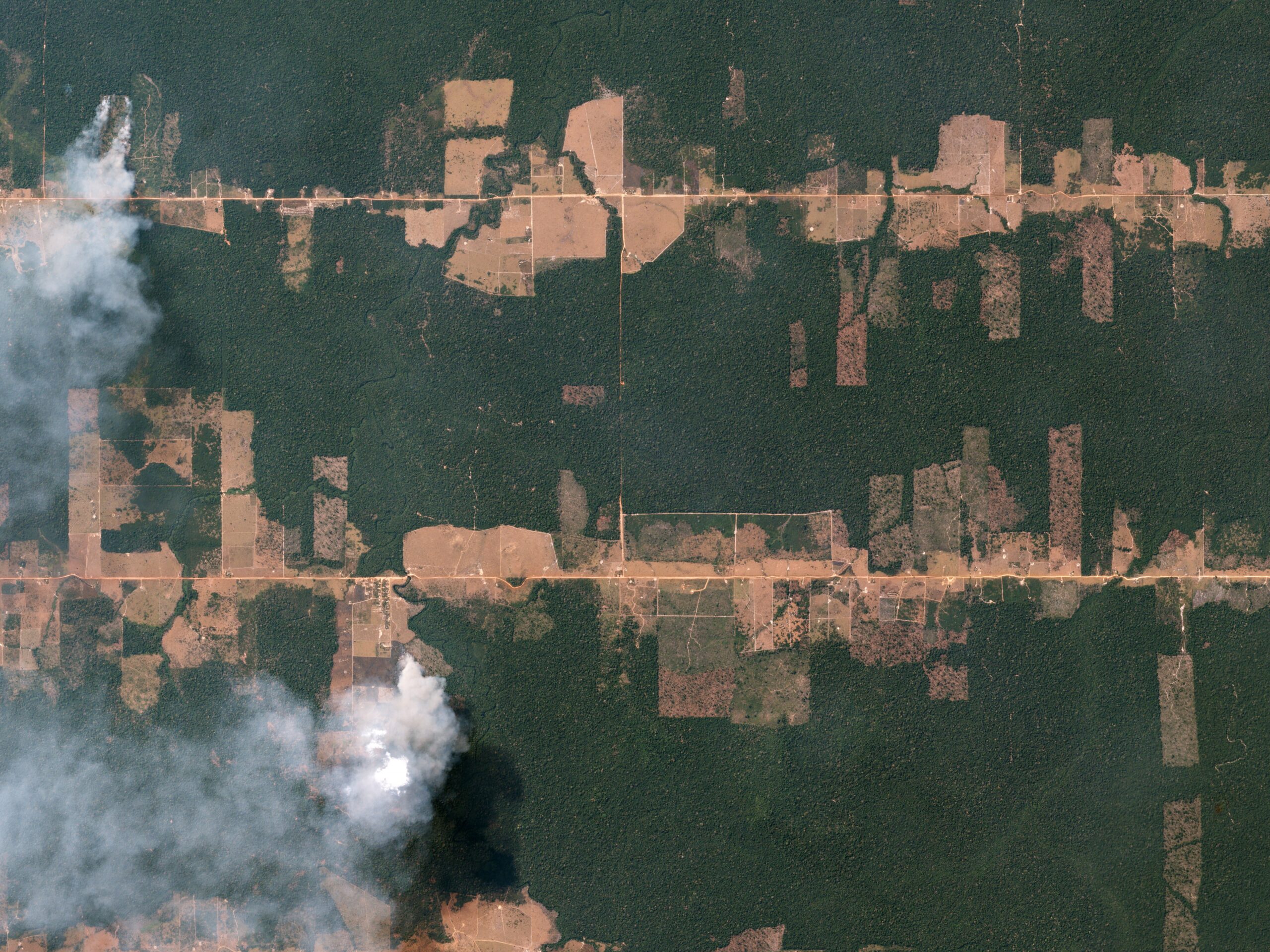
Critical minerals are just one example of Latin America’s wider significance. The region is also home to the Amazon Rainforest, a key biome with implications for the global climate, as deforestation drives us towards a planetary scale “tipping-point” in which the ecosystem could lose its ability to reproduce itself, with potentially cascading effects. Parts of the region have, moreover, fallen prey to the global trend of far-right climate denialism, which has made it even more difficult to chart a political course that can simultaneously address the contemporary crises of democracy, inequality, and climate change.
Nor is Latin America a bystander in the deepening geopolitical conflict between the US and China. It is, rather, a crucial theatre. China has sought to entangle the region in its Belt and Road Initiative, building on the trade and financial connections that it has established there since the 2000s. This has divided opinion among Latin Americans: some pin their hopes on what they see as South-South cooperation, while others fear that it will create a novel form of dependency. The US government, for its part, has abandoned any pretense of peaceful diplomacy and reverted to brute force and direct political interference, with its blatant tilting of scales in the recent Argentinian elections and murderous attacks on boats in the Caribbean and Eastern Pacific, launched as part of an overt regime-change operation against Venezuela—with military escalation now an imminent possibility.
If the importance of understanding Latin America is beyond doubt, the next question is how best to do it. Conventional approaches are often tinged with colonial undertones, presenting the region as plagued by corruption and populism, lagging behind other parts of the world on account of its inadequate institutions. The implications of this framework are summed up by Tony Wood: “unstinting support for the prerogatives of foreign investors and domestic elites, together with a relentless emphasis on the need to keep politics firmly within the confines of the reigning orthodoxy.” No effort is made to grasp Latin American realities. Instead, there is simply a venting of frustration about the region’s refusal to follow the script: what Dipesh Chakrabarty colorfully describes as “the ‘failure’ of a history to keep an appointment with its destiny.”
There are alternatives to this outlook. Latin Americans’ attempts to break free from Eurocentric dogmas are nothing new. In his founding manifesto for the United Nations Economic Commission for Latin America and the Caribbean, Raúl Prebisch faced this challenge head on, arguing that “one of the most conspicuous deficiencies of general economic theory, from the point of view of the periphery, is its false sense of universality.” Together with his colleagues at the commission, he developed ways to analyze Latin America—for instance, through the lens of the core-periphery system—that were among the high points of early development economics. At the same time, Marxist thinkers reacted against vulgar attempts to apply the schema of Europe’s feudalism-to-capitalism transition to Latin America’s colonial period, insisting on the particular dynamics of the latter.
An upshot of these efforts is that Latin America, as well as Global South in general, is now sometimes conceived as the “negation of the North (the ‘other’ place promising a better life).” The recent surge of interest in ancestral knowledge, agroforestry practices, and long-forgotten approaches to the relationship between nature and society reflects this attempt to “brush history against the grain” and overturn traditional ideas of progress. Yet if the South must also be seen as the “limit of the North,” then thinking about Latin America on its own terms cannot be simply about emphasizing particularity or depicting the region as a world apart, isolated from the centers of accumulation. The goal of structuralism and Latin American Marxism was, in fact, to shed light on the processes of uneven and combined development: the diverse impacts of capital across the globe. As the world market expanded and spatio-temporal barriers were broken down, capital transformed societies from East to West, North to South—though not all of them followed the same route or reached the same destination.
Following in these tracks, contemporary political economy has much to offer: investigating the connections between Latin American production chains and wider markets, and assessing the changing class structures within countries, as a means of reading the turmoil that afflicts the region (along with much of the world). By mapping local attempts to resist global commodification trends and financial practices, we can begin to identify emerging political subjects. By examining the concrete effects of global climate change and climate policies, we can gauge the obstacles to a just transition, and the prospects for surmounting them. Meridional will contribute to the ongoing debate on such issues, ranging from particular commodities to theoretical controversies, specific countries to regional trends.
In 1926 Gramsci drafted a series of notes on what he called the “meridional question” (or the “southern question,” as English translators chose to call it). “Meridional” in this case referred to the South of Italy, the region from which the author came from and which played a peripheral role in the European capitalism of the 1920s, although it also had much broader applications—including in his own later work—describing the jagged course of accumulation taking place across the globe. In these famous passages, Gramsci wove together multiple threads—the uneven dynamics of Italian development, the politics of an alliance between workers and peasants, the position of intellectuals—and refused to explain them through inherited formulas, instead searching for cracks in the status quo that could allow an emancipatory politics to take shape. While today’s meridional questions are very different to those of Gramsci’s Mezzogiorno, this column will nonetheless look to this tradition of critical thought as a compass to interpret our present moment.
Further Reading

The World’s Stockyard
Agribusiness and the green transition in Brazil
In the age of climate emergency, the developmental drawbacks of being a primary goods exporter may intensify. Besides barriers to climbing the value chain on...

The Agribusiness Pact
The “reprimarization” of the Brazilian economy
Over the past two decades, Brazilian media and political discourse have exalted the uncontroversial success of a magical entity known as “agribusiness.” Closely associated with...

Brazil and the World System
An interview with Brazil's Minister of Finance
As the world’s seventh largest economy, poised between Western and Eastern power blocs, Brazil is at the forefront of contemporary debates on geopolitics, development, and...