November 14, 2025
Analysis
Plastic Planet
Stalled negotiations and accelerating accumulation in the global petrochemicals industry

The Polycrisis has always taken an interest in fossil fuels. We have written about how the industry has shaped international climate diplomacy and liberal politics. We’ve looked at the dynamics of the mid-transition, where fossil-fuel interests are fighting a desperate rear-guard struggle to secure future demand, even as the growth era for fossil fuels is ending (as many producers, investors and forecasters acknowledge). We’ve published on the new decline in natural gas and in oil demand. But not all oil is burned. A lot is simply feedstock for the petrochemical industry to churn out plastics. And the industry has long seen plastics as its saviour from their nightmare world where electric cars crush oil demand.
For this edition of the Polycrisis, we asked Venus Bivar, who is professor of environmental history at Oxford, to analyze the petrochemicals and plastics industry. She has written about how the joint crisis of rising economic inequality and climate change is shaping a new generation of intellectual work. Her forthcoming book is on the political ecology of postwar Marseille at the intersection of petrochemical-driven economic development, decolonization, and environmental degradation. — Kate Mackenzie and Tim Sahay
Three years ago, the United Nations Environment Assembly adopted a resolution to negotiate a legally-binding treaty to regulate plastics pollution. Representatives from 184 countries were tasked with participating in a series of five rounds of negotiation to advance towards a binding agreement. When the delegates failed to arrive at an agreement during the fifth and final round, which took place in November 2024 in Busan, an overtime session was scheduled for the following summer. In August of this year, delegates met once again, this time in Geneva, and once more failed to secure an agreement. Another meeting is scheduled for early 2026, but will be restricted to administrative matters; there are currently no plans for how and when negotiations on regulation will resume.
The disagreement that led to the collapse of the talks lies between delegates who are advocating for improvements in waste management, and delegates who are advocating for curbs on production. The former represent nations with vested interests in petrochemicals —chief among them, Saudi Arabia, Russia, and the United States—while the latter represent a broad coalition of nations, many of which have been on the receiving end of the plastic-pollution crisis. These include Panama, Kenya, and Norway. At stake, on the one hand, is a multi-billion-dollar industry, and on the other, the health of the planet and all who live here.
The influence of the lobbyists from the petrochemicals sector is not to be underestimated. Julien Gupta, a freelance journalist, reported that at the third round of treaty negotiations in Nairobi, there were 143 registered lobbyists from the industry, and many more unregistered. The Centre of Environmental International Law has estimated that 234 fossil-fuel and chemical-industry lobbyists were present at the full cycle of negotiations—outnumbering national delegations, indigenous representatives, and scientists. The latter had difficulty securing limited registration spots.
The lobbyists are fighting to protect the ability of plastics producers to keep on producing. In 2024, the global market was valued at USD 523.48 billion; it is projected to grow to 754.23 billion by 2032. Petroleum is a feedstock for plastics production: 98 percent of all plastics produced globally are derived from fossil fuels. Of the top five plastics producers in the world, four are petro companies: Sinopec, ExxonMobil, Saudi Aramco, and PetroChina (LyondellBasell, a chemicals company, ranks third).
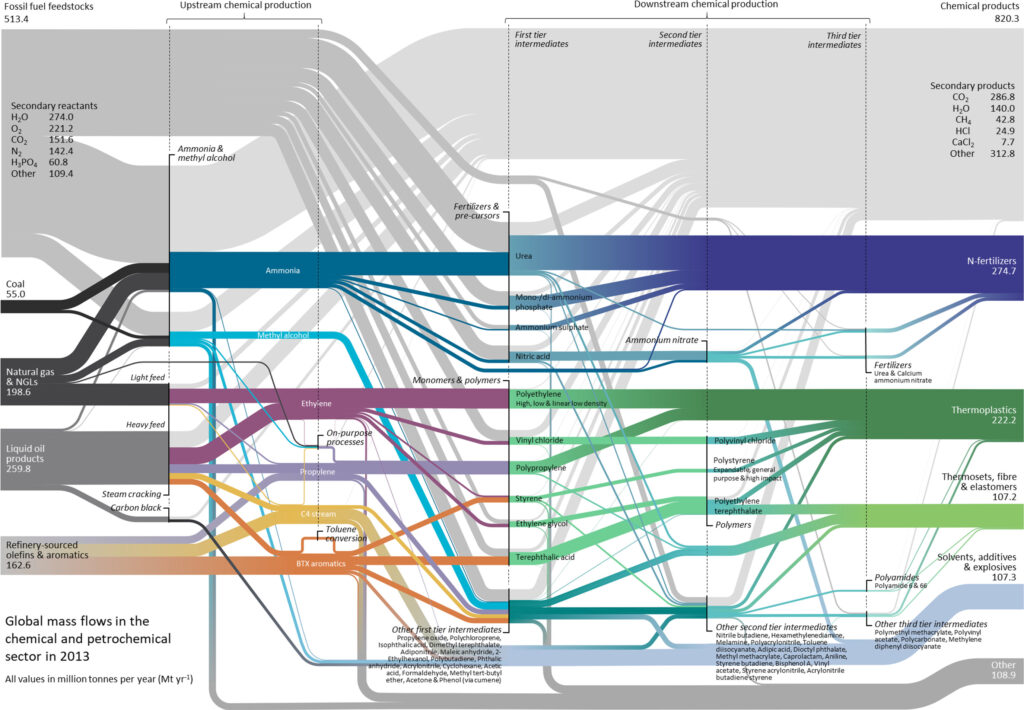
As the push for an energy transition continues, fossil-fuel firms are looking to diversify their revenue streams, and developing their plastics departments is proving to be highly lucrative. Petrochemicals—the sector of the oil and gas industry that produces materials and inputs downstream of petroleum—is expected to account for more than a third of the growth in oil demand by 2030, and nearly half of the growth by 2050. Needless to say, the petrochemical firms’ sustainability agenda consists of advocating for recycling, rather than production curbs.
Pollution north and south
Every year, over 400 million tons of plastic are produced. This plastic is used to make a wide variety of products, from lightweight aeronautics components to food packaging. While some essential sectors, particularly medicine, rely on plastics to deliver life-saving technologies, most of the plastic that is produced could be replaced by less deadly materials. Half of annual production is used to manufacture single-use items, like soda bottles, balloons, wet wipes, and food wrappers. At the current rate, global plastic pollution is estimated to triple by 2040.
Seventy-five countries involved in the plastic treaty negotiations have come together under the banner of the High Ambition Coalition to End Plastic Pollution. Their number one priority is to decrease the amount of new plastic that is being produced. But despite representing 40 percent of the negotiating countries, they have been unable to realize even a modest commitment to reduction; oil-producing participants insisted early in the treaty process that all decisions would require a consensus opinion. As long as the consensus requirement is in place, it is impossible for the negotiations to meaningfully address the plastics crisis.
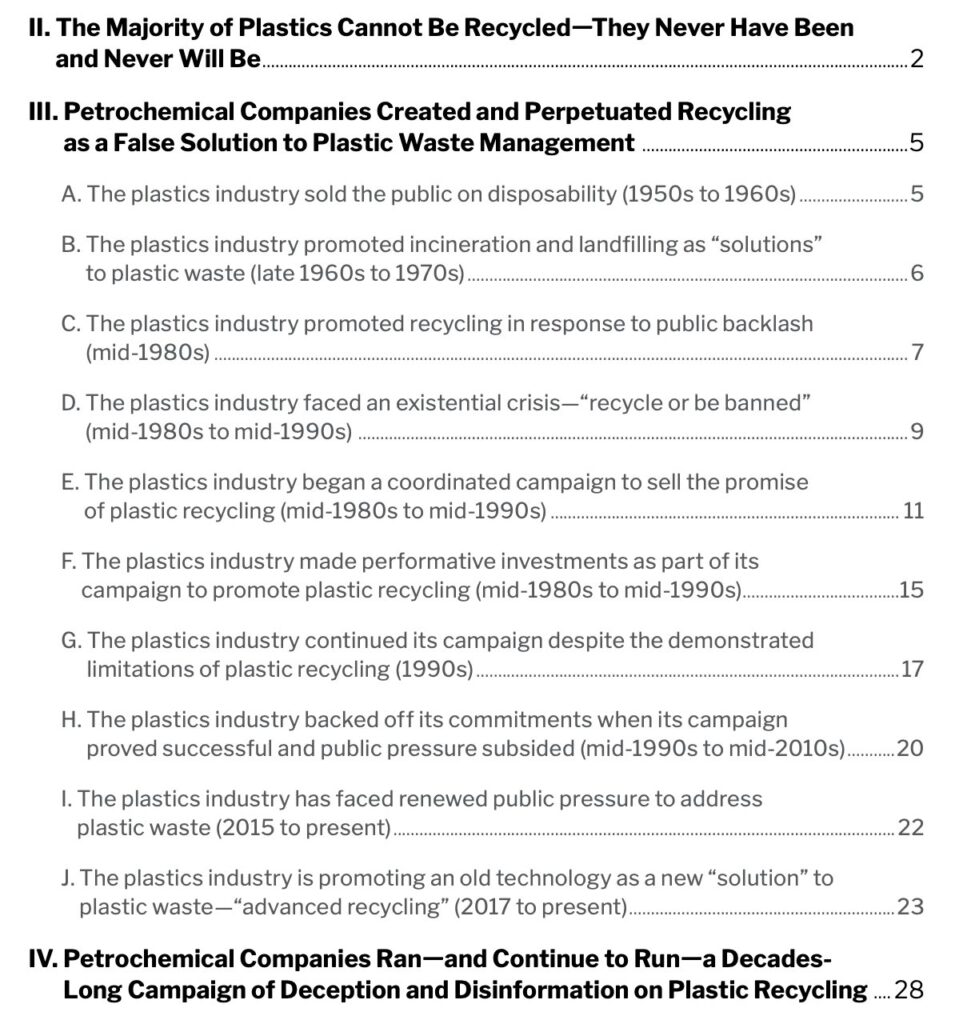
The environmental consequences of plastics production are nothing short of catastrophic. Less than 10 percent of all plastics that go into waste streams are recycled. Because of their chemical composition, plastics are extremely difficult to recycle—and of those few recyclable plastics, they can only be recycled once, downcycled into lower-quality and disposable plastics. The 90 percent of plastics that are not recycled are incinerated, landfilled, or sold to processors. None of these disposal methods are safe. While more sophisticated incineration facilities have filters to limit the amount of toxic fumes that are released into the atmosphere, incineration in poorer countries releases highly toxic dioxins, mercury, and polychlorinated biphenyls. Plastics in landfills emit gas as they degrade and leach into the groundwater and soil. Waste-management facilities in the global South are overwhelmed by the detritus of Northern mass consumption.
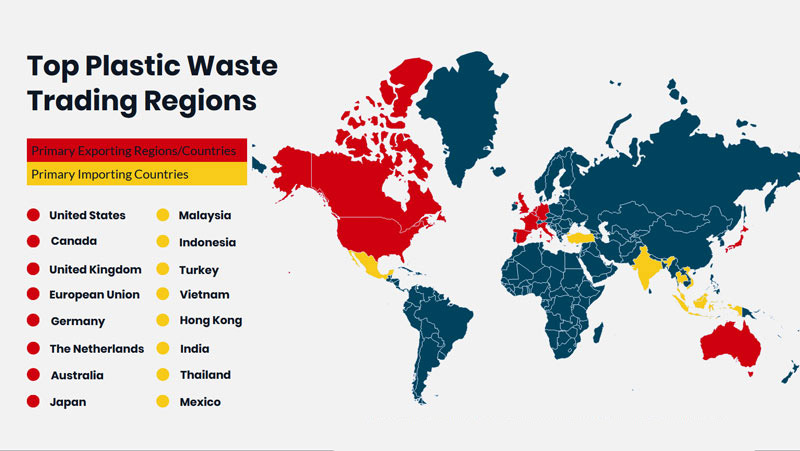
Countries like the Philippines, India, Malaysia, and Indonesia have become major importers of plastic waste. In wealthy countries, sorting and recycling plastic is expensive, often more so than simply producing new plastic. But in developing countries, where wages are low, the economics of recycling are more favorable. So wealthy countries export their waste, relieving stress from their own over-burdened waste systems, and firms in poorer ones import it for sorting, repurposing, or elimination. Much of it is incinerated in the open air, or illegally dumped on roadsides, in fields, and waterways.
For the geographer Max Liboiron, a system that seeks to manage rather than eliminate environmental pollution should best be described as colonialism—a system that grants a colonizer access to land for its goals. The plastics industry, dominated by single-use products whose physical life lasts centuries, exemplifies the idea of colonial sacrifice zones, from the Kisumu landfill in Kenya to the Mekong River.
Convergence
While plastics pollution threatens every square inch of the planet, it is the oceans that have become ground zero for the fight against disposability. Approximately 10 million tonnes of plastic enter the oceans every single year. Autopsies reveal the stomachs of sea birds and sharks to contain the discards of a human civilization drunk on plastic disposability. The Pacific Garbage Patch has become a ubiquitous referent for an ailing planet.
Just as the Earth’s waters have become contaminated with plastic pollution, so too have our bodies. Earlier this year, research scientists dominated the headlines with the finding that human brains may contain up to seven grams of plastic (the same amount that goes into the making of a small plastic spoon). And it’s not just our brains. Microplastics (smaller than 5mm in diameter) have been found in human lungs, testicals, livers, kidneys, bone marrow, and placentas. All told, plastics contain more than 13,000 chemicals, many of which are highly toxic; these include flame retardants, PFASs, phthalates, and bisphenols. We ingest these chemicals in the plastic-infused dust that we breathe, the water that we drink, and the food that we prepare with plastic utensils or eat from plastic containers. While research on the effects of plastic contamination is still in its early stages, there is compelling evidence to suggest that plastics might contribute to hormonal anomalies and reproductive issues.
At the dawn of the plastic age, in the 1950s, Lloyd Stouffer, the editor of Modern Packaging magazine, declared that “the future of plastics is in the trash can.” He was pushing the industry to increase revenues by moving toward products with shorter use spans. Little did he know how prescient his remark would be. Seventy years later, the trash cans have spilled over into the soil, the water, and the flesh of every living being on Earth. And there is little sign that things are slowing down, in spite of the efforts of good-faith actors who are participating in the plastics treaty negotiations. As fossil-fuel companies face the existential threat that is the transition to renewable energy, they are doubling down on plastics production. In 2024, the plastics industry in the United States invested a staggering 17.5 billion USD in new facilities and equipment.
Further Reading

Scorched Earth
Climate adaptation on a boiling planet
Programming Note: In addition to this monthly newsletter, Kate and Tim are regularly publishing dispatches and putting out podcasts, which you can find at thepolycrisis.org....
COP30 Without the USA
Climate cooperation, forest funds, and the tentative move toward green industrialization
Climate cooperation, forest funds, and the tentative move toward green industries

The Private Sector at Seville
Investment alliances at FfD4
Ten years after the 2015 Addis Ababa Conference on Financing for Development, the finance development doctrine of “Billions to Trillions,” popularized by the World Bank,...