July 8, 2025
Analysis
Technolatinas
Big tech and the global technological oligopoly
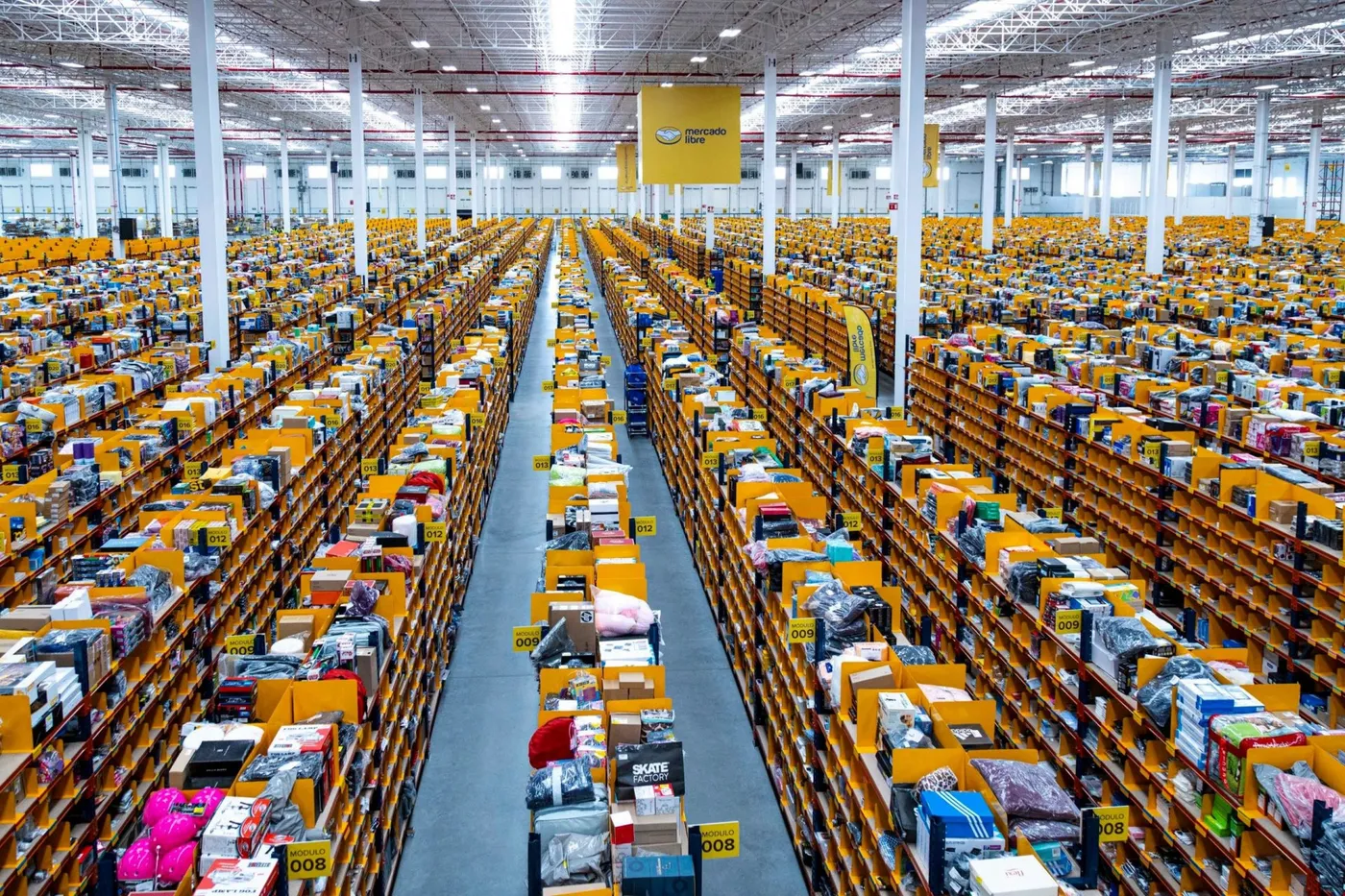
The past decade has seen the proliferation of new consumer-oriented technology companies across Latin America, changing how residents of the region interact with retail, services, and banking. These “technolatinas,” as they are called, have managed to establish themselves as profitable and growing businesses. The most prominent among them include: Mercado Libre (MeLi), Latin America’s largest digital platform and an online marketplace with a market capitalization of $50 billion; Magazine Luiza (Magalu), a traditional but now largely digital retailer based in Brazil with a market value of $25 billion; and Nubank, Latin America’s largest digital bank, boasting 70 million customers across the region.
Yet despite their significant market growth, technolatinas remain largely dependent on the digital infrastructures owned and operated by companies like Google, Amazon, and Alibaba. The companies that produce these dominant technologies—almost always based in the US and China—centralize data processing and storage tools necessary for the functioning of regionally-based companies. This has produced profound technological and market asymmetries that ultimately reinforce the longstanding economic power imbalances between the North and South.
The rise of technolatinas and their continued links to big tech are the result of the economic shifts and crises of the past two decades. At the beginning of the twenty-first century, as the global economic system began to turn towards data exploitation as a source of sustained profit and growth, investment has been directed towards risky, yet profitable, sectors in big tech. Intangible assets have gained greater importance, and the control of information and knowledge is becoming increasingly critical for the appropriation of rents.1Haskel, J., and Westlake, S. (2018) Capitalism without capital: The rise of the intangible economy. Princeton: Princeton University Press. Orhangazi, Ö. (2019). The Role of Intangible Assets in Explaining the Investment-profit puzzle. (<)em(>)Cambridge Journal of Economics(<)/em(>), 43(5), 1251-86.
The persisting dominance of technologies of Apple, Google, and Amazon across the world have led to the consolidation of a global technological oligopoly, in which the processes essential for market growth in the global South have in turn bolstered the accumulation of capital in the global North. Technolatinas, in turn, have found themselves in a peculiar intermediary position within the hierarchy of global technology companies.
The global technology oligopoly
Over the last twenty-five years, big tech has experienced exponential growth and now occupy authoritative positions in the global economy. The leadership of a small group of companies from the United States and China—Google, Amazon, Meta, Apple, Microsoft, Alibaba, Tencent, and Huawei—has dominated strategic segments in cloud computing, big data, artificial intelligence, and connectivity. Some were already national and regional champions, but the new regime of global accumulation has amplified their success. Forbes’ Global 2000 shows how these companies have grown to be the world’s largest firms since 2010:
Table 1: Position in Global 2000 of selected firms
| Company | 2010 | 2015 | 2020 | 2022 | 2023 | 2024* |
|---|---|---|---|---|---|---|
| 120 | 39 | 13** | 11 | 7 | 10 | |
| Amazon | 315 | 458 | 22 | 6 | 36 | 6 |
| Meta | N/A | 280 | 39 | 34 | 31 | 24 |
| Apple | 75 | 12 | 9 | 7 | 10 | 12 |
| Microsoft | 49 | 25 | 13** | 12 | 9 | 8 |
| Alibaba | 1621 | 269 | 31 | 33 | 54 | 41 |
| Tencent | 1073 | 304 | 50 | 28 | 35 | 38 |
* The index is calculated in April of each year.
** Google and Microsoft share 13th place in 2020.
*** No data: the company was not among the 2000 largest companies in the world.
Big tech companies operate powerful data centers located across the world, in which they store and manage huge volumes of data (their own and the data of others) and provide processing services to third parties. They operate with three main business models: software development used in different technological platforms, the manufacture of devices equipped with company or third-party software, and the provision of internet infrastructure. The key to the expansion of big tech lies in heavy investments in research and development (R&D), strategic acquisitions, and intangible assets such as advanced algorithms, big data, and physical networks, such as submarine internet cables.2 More information regarding the business model of each of the WGs can be found in Borrastero and Juncos (2020, 2023) available at: https://ri.conicet.gov.ar/handle/11336/146560 and https://revistas.unc.ed(<)a href='https://revistas.unc.edu.ar/index.php/DTI/article/view/40589'(>)u.ar/index.php/DTI/article/view/40589 (<)/a(>)respectively.
Big tech provides services in multiple interrelated segments of the sector. They compete and cooperate with each other and invest in certain common technologies. For example, in 2015, Google developed and donated to the Linux Foundation an open source system for containerized function automation—Kubernetes—so efficient for cloud application development that it is now supported and widely used in the clouds of Amazon (AWS), Tencent Cloud, iCloud (Apple) and Azure (Microsoft). Thanks to the interactions it facilitates, the software has become the industry standard, granting Google a comparative advantage.
This type of competition is central to the new logic of digital capital monetization and has three distinctive characteristics. The first is its collaborative and competitive nature: while competing, big tech companies collaborate in certain aspects, such as technological standardization, interoperability, and even collusion.3The U.S. House of Representatives found that Apple had negotiated a deal with Amazon and its Prime Video service in late 2016, whereby Amazon would only have to pay a 15 percent commission to Apple for customers using Amazon’s video service through Apple’s apps, while Apple routinely charged 30 percent See: Borrastero, C. and Juncos, I., The Global Technological Oligopoly and the new techno-economic peripheralization of Latin America, (<)em(>)Documentos de Trabajo e Investigación de la Facultad de Ciencias Económicas(<)/em(>) (UNC) 4(2023). Second, it is oligopolistic, since companies form a group whose capabilities feed back on each other, without excluding the possibility of monopolizing certain market segments.4Even the growth of the Chinese is marked by the geopolitical dispute with the United States in which the GAFAMs are actively participating. See: Borrastero, C. and Juncos, I., El Oligopolio Tecnológico Global, la periferia digital y América Latina, (<)em(>)Desarrollo Económico(<)/em(>), 64(243) (2024): 110–136. And third, it is hybrid, involving digital and physical technologies and forming increasingly vertically integrated ecosystems.5It is striking, for example, that there are no companies outside the oligopoly that own submarine internet cables, and big tech is also advancing in critical positions for 5G. See: Borrastero, C., State, companies and geopolitical factors in the development path of 5G networks in Argentina, (<)em(>)Estudios Sociales del Estado(<)/em(>) 10(19), (2024): 104–138. This in turn has formed the global technological oligopoly, in which structural changes in the system of global production and innovation have led to a reconfiguration of the international division of labor.6 Borrastero, C. and Juncos, I., The Global Technological Oligopoly, the digital periphery and Latin America, (<)em(>)Economic Development(<)/em(>) 64 (243), (2024): 110–136.
Google’s Firmina submarine cable recently arrived in Argentina from the United States. Huawei has a near 50 percent stake in 5G infrastructure in Latin America. Overall, these giants have significantly expanded their presence in emerging markets, strengthening their control of key assets required for technological and economic development. The hyper-concentrated market dynamics in the data-driven digital economy have generated information asymmetries that deepen power imbalances between regions, countries, and actors.7UNCTAD (2021). Digital Economy Report 2021. Cross-border data flows and development: For whom the data flow. Retrieved from https://unctad.org/publication/digital-economy-report-2021. In the international digital division of labor, the mechanisms of technological subordination of the periphery to the center reinforces the traditional digital divide with new forms of predatory rentierism based on data control. The dominance of big tech significantly limits technological autonomy in peripheral regions such as Latin America—more so than in certain parts of Asia, which face different challenges given their form of integration into the global digital value chain. Latin America thus faces a dual technological dependence on the United States and China.
This dependence has consolidated certain forms of tech-related employment in the periphery. Big tech tends to concentrate low value-added operational tasks in Latin America, reserving strategic developments for their headquarters in the center. Even the managerial positions in the technolatinas are usually occupied by executives from the Northern-based big tech companies. Technological oligopolies have thus redefined historical center-periphery dynamics in Latin America.
But these dynamics do not necessarily mean that companies outside the global technological oligopoly are simply burdened with the disadvantages of subordination. There are peripheral players who, while technologically dependent on the giant companies in terms of data processing and storage tools, benefit from their intermediate position in the global value chain through their own ability to develop cutting-edge technologies on a much smaller scale. These local players—the technolatinas—extract value under predatory schemes similar to those of big tech companies.
Technolatinas and big tech
To understand Latin America’s role in this new configuration of the global technology market, we must understand how big tech operates in Latin America and which regional players find success. The region’s marginal place on the map of global technology, instead of implying irrelevance, positions it as a market to be conquered. As elsewhere, big tech companies engage in intense competitive and collaborative activity in Latin America.
The major companies have set up subsidiaries for mainly commercial purposes, i.e., sales and/or delivery of products and customer service. Google has subsidiaries in Brazil, Argentina, Mexico, Colombia and Chile. Microsoft also has subsidiaries in Argentina, Uruguay, Colombia, Chile, and Venezuela. AliExpress—the delivery division of Alibaba—has opened commercial offices in Brazil, Chile, Colombia, and Mexico since 2010, and Alibaba has expanded its operations especially in Brazil, strengthening its role as the main supplier of Chinese products through B2B and, increasingly, B2C platforms. Apple has maintained a subsidiary in Chile since 2012, and Amazon has positioned itself as the second most important marketplace in the region, competing with regional e-commerce giants such as Mercado Libre and Magazine Luiza.8 Borrastero and Juncos (2024) “El Oligopolio Tecnológico Global, la periferia digital y América Latina,” available at https://revistas.ides.org.ar/desarrollo-economico/article/view/699/382.
Big tech also invests heavily in physical infrastructure, such as data centers and submarine cables. In 2011, Amazon installed a major data center in São Paulo, Brazil, which today provides essential services to regional unicorns such as Rappi, Nubank, and MercadoLibre, as well as public institutions. Microsoft also opened data centers in Brazil to compete directly with AWS and carries out promotional activities in artificial intelligence through local partnerships with universities and think tanks.
Huawei, for its part, has adopted a more aggressive strategy by launching data centers in smaller markets such as Chile and Peru, key countries within China’s digital “Belt and Road Initiative.” Strong diplomatic support from the Chinese government has facilitated Huawei’s rapid expansion in telecommunications and 5G technology in countries such as Brazil, Argentina, and Colombia, among others.
The provision of digital financial services is another relevant area of competition. Tencent has a stake in Nubank, a leader in Brazilian digital banking, while Google Pay, Apple Pay, and WhatsApp Pay are looking to capture emerging markets by taking advantage of low traditional banking penetration and less stringent regulations. These examples show how competition and cooperation among these companies profoundly shape the Latin American technology landscape.
The emergence of technolatinas can also be seen as a downstream effect of the expansion of technology business models around the globe. In this regard, three large companies in Latin America stand out: Mercado Libre (MeLi), Magazine Luiza (Magalu), and Nubank. These companies have managed to establish themselves as regional leaders, but they simultaneously face considerable limitations due to their technological dependence on big tech.
Table 2: Profile of selected technolatinas
| Company | Main activity | Founding year | Origin country |
|---|---|---|---|
| Mercado Libre | E-commerce, Fintech | 1999 | Argentina |
| Magazine Luiza | E-commerce | 1957/2016 | Brazil |
| Nubank | Digital banking, Fintech | 2013 | Brazil |
Mercado Libre (MeLi)
Mercado Libre is currently the largest digital platform in Latin America, operating in eighteen countries. It is the technology company with the highest value in the region, reaching a market capitalization of $49.4 billion dollars at the close of 2022 after surpassing $100 billion in 2021. During the pandemic, it was the sole Latin American company in the Financial Times list of the 100 global companies with the highest earnings. Its business model is a copy of Alibaba’s: an online marketplace for small and medium-sized producers and merchants, and an online payment and credit system—with the technical and operational characteristics of Alipay and Ant Financial, owned by the Chinese group. However, MeLi’s scale is much smaller than that of the giants: in 2019, MeLi’s sales accounted for 4 percent of Alibaba’s sales and 0.8 percent of Amazon’s, and its market capitalization at the close of 2022 is 21 percent of Alibaba’s and 3 percent of Amazon’s.
MeLi’s business model recognizes the importance of data and AI to process it, especially in its MercadoPago division, where it uses these tools to optimize the risk rating process of debtors. Mergers and acquisitions in MeLi’s business growth strategy are also a frequent and relevant practice. In 2007, the company went public and became part of the Meli Inc. holding company, which made it the first Argentine company to be listed on NASDAQ, and this contribution of funds allowed it to expand in the region, absorbing competitors at a dizzying pace until it obtained the dominant position in e-commerce.9Major acquisitions include its number one regional competitor in this area in 2005 (deRemate.com), Classified Media Group inc. (2008) and its subsidiaries (tucarro.com, tumoto.com, tuinmueble.com, tulancha.com, tuavion.com), Autoplaza (2011), Neosur (2013), real estate portal (2014), Kpl, Metros cúbicos and Silicon Valley e-commerce startup dabee (2015). More recently, in 2021, the firm acquired Kangu Participações S.A. for $26.5 million and Redelcom S.A. for $24.1 million. [fn](<)/p(>) (<)p class='wp-block-paragraph'(>)But despite its size, MeLi does not have its own cloud services system, a strategic infrastructural asset for storing and processing large volumes of data. Instead, MeLi is a customer of Amazon Web Services.[fn] Filipetto, S. and Pontoni, G. (2020). Labor relations and platform economics. The case of MercadoLibre in recent Argentina. Realidad Económica, 50(335), 15-44. By 2018, MeLi was already sending 1TB of data per day to Amazon’s cloud. MeLi’s R&D investment accounted for almost 10 percent of its sales in 2019, while this same indicator was identical for Alibaba and 13 percent for Amazon, although in absolute terms MeLi’s investment volume was much, much lower than that of the global companies: 4 percent of what Alibaba invested and 0.6 percent of what Amazon invested.
In addition to its market strategies, MeLi’s profitability is supported by the Argentine state. Despite not being a small or medium-sized enterprise, it has been included in different state promotion incentives for the software industry and the knowledge economy (of 2004, 2011, 2019). As a result, MeLi has been allowed to pay only 30 percent of employer contributions and 40 percent of income tax of what a company of its size owed.
The Argentine Central Bank’s financial regulations have also favored the company: MeLi is free from the obligation to encase its wallet balances in government securities that pay the monetary policy rate, and the company has been able to avoid the deconcentration measures. Argentina financial entities cannot carry out operations outside their sector, but MercadoLibre and MercadoCrédito are two companies that make up a single entity that in theory could be divided. MeLi has also received prerogatives from the National Social Security Administration for the payment of benefits through the platform, and exclusivity agreements with different provinces.10Borrastero, C. and Juncos, I. (2024). The Global Technological Oligopoly, the digital periphery and Latin America, (<)em(>)Economic Development(<)/em(>), 64(243), pp. 110-136.
Magazine Luiza (Magalu)
Magazine Luiza was founded in 1957 and is headquartered in São Paulo, Brazil. Originally a traditional retailer, it began a digital transformation process in 2016, focusing on online sales and advanced logistics distribution. At the close of 2021, its market value was $25.2 billion, doubling its total sales between 2019 ($5.5 billion) and 2021 ($10.7 billion).11Forbes (2021). Global 2000 Index 2021 edition. Forbes, retrieved from https://www.kaggle.com/datasets/arjunprasadsarkhel/forbes-top-200020172021 This growth was driven mainly by digital sales that rose from $2.38 billion in 2019 to $7.65 billion in 2021.
Magalu operates more than 1,400 physical stores, twenty-seven distribution centers, and has more than 1,600 online sellers. By 2021, the platform had reached 37 million shoppers in Brazil. Its logistics operations, considered low-cost and high-speed, are organized in the Agency Magalu division, implemented in more than 400 stores, and Magalu Entregas, which managed the shipment of 80 percent of sales made by third parties on its platform in 2021. In addition to retail and logistics, Magazine Luiza has developed its fintech division—MagaluPay—reaching 4.8 million open accounts and delivering 7.2 million credit cards by December 2021. It also created Magalu Ads, focused on digital advertising, which in 2022 registered more than 1,500 sellers using its platform to advertise products.
The company’s technology division, Luizalabs, employs more than 1,800 engineers dedicated to the internal development of solutions based on big data and machine learning, applied especially to logistics, fintech, and inventory management. According to the company’s annual reports, Luizalabs is a key part of Magalu’s growth and profitability strategy, providing technology-based and value-added services.
Two other aspects characteristic of large Latin American technology companies appear in the case of Magalu. Like MeLi, the company has made several significant acquisitions in recent years. In 2021 it acquired KaBuM, a leader in technology and video game e-commerce, for $670 million; Hub Fintech, a digital banking platform with more than 25 million users, for $55.3 million; and Vip Commerce, a startup specializing in supermarket digitization, for $12.3 million. Magalu also depends on technologies provided by the global technological oligopoly: the company is a Google Cloud user, which has allowed it to increase traffic levels on its website. The implementation of Google Cloud allowed the company to beat the traffic record on its website on Black Friday 2018. For its part, the Brazilian state has influenced Magazine Luiza’s growth, mainly through regulations and acquisition approvals, rather than direct incentives.The Administrative Council for Economic Defense (CADE), Brazil’s antitrust regulator, has played a crucial role in Magazine Luiza’s expansion by approving strategic acquisitions. In 2021, CADE authorized Magalu’s purchase of fintech Hub Prepaid allowing the company to strengthen its presence in the financial sector.12 Bnamericas (2021). Brazilian Magazine Luiza gets green light to acquire fintech. Available at: (<)a href='https://www.bnamericas.com/es/noticias/brasilena-magazine-luiza-obtiene-luz-verde-para-adquirir-fintech'(>)https:(<)/a(>)//www.bnamericas.com/es/noticias/brasilena-magazine-luiza-obtiene-luz-verde-para-adquirir-fintech?. While we found no evidence of Magalu receiving specific state subsidies, the company has participated in wide-ranging government initiatives. During the Covid-19 pandemic, the company’s work teams moved vaccines around Brazil at a time when the federal government’s response was limited.
Nubank
Nubank is the largest digital bank in Latin America, with more than 70 million users in 2022 and a market valuation of $30.79 billion. Its main market is Brazil, although it also has a presence in Mexico and Colombia, as well as an office in Berlin. Nubank offers all the typical services of a traditional bank, but without a physical presence. In 2021, its initial public offering on the New York Stock Exchange raised more than $2.6 billion. Among its most prominent investors are Warren Buffett, Tencent Holdings, and Sequoia Capital.
In Nubank’s data-driven business model, the capacity to store and process data and the intensive use of artificial intelligence are key. It has approximately 1,000 engineers distributed in seventy-five teams operating from six global technology centers located in Brazil, Mexico, Germany, the United States, Argentina, and Colombia. Part of its executive team comes from large technology companies, including former executives from Facebook, Google, Amazon, and Alibaba. Among the company’s main technological developments is NuCore, a banking platform that works in the cloud, for whose operation Nubank uses Amazon Web Services infrastructure.
Like big tech companies and their regional analogues, Nubank has made strategic acquisitions. Highlights include Easynvest (a Brazilian investment platform with more than 1.6 million clients), acquired for $451.5 million in 2021; Olivia’s (a US company with subsidiaries in Brazil, specializing in applying artificial intelligence in the retail banking sector with more than 100,000 users on its mobile app), bought for $72 million in 2022; and Cognitec, for which it paid $10.4 million in 2020.
Finally, local government regulations and policies have both supported and restricted the firm’s expansion at different moments. Nubank has established partnerships with the Brazilian government and different states to facilitate its clients’ access to digital public services. Recently, 3.2 million Nubank users were linked to the gov.br, giving them access to more than 4.200 digital public services such as the National Digital Transit Document and the SUS public health system. The company has also signed seven new agreements to offer the company’s 100 percent digital consigned loan service (NuConsignado) to the three branches of the Brazilian Armed Forces (Air Force, Navy and Army) as well as the municipalities of São Paulo, Rio de Janeiro, and Belo Horizonte, and the state of Paraná.
But Brazil’s Central Bank and the National Monetary Council also recently launched a public consultation to regulate the use of the term “bank” in digital financial institutions, a measure which could force Nubank to obtain a formal banking license or modify its brand. If the regulation is approved, Nubank could either acquire a banking license, which would imply complying with stricter capital, solvency, and governance requirements (and consequently increasing operating costs), or change its brand identity.13In May 2025, Nubank appointed (<)a href='https://www.reuters.com/business/finance/nubank-taps-former-brazil-central-bank-chief-campos-neto-management-team-2025-05-06/?utm_source=chatgpt.com'(>)Roberto Campos Neto(<)/a(>), former president of the Central Bank of Brazil, as vice president and global head of public policy, hoping that his experience in monetary policy and financial regulation will strengthen Nubank’s international expansion strategy and improve its relationship with regulators.
The digital peripheralization of Latin America
An examination of the world’s largest technology companies and the newly insurgent technolatinas shows that instead of a challenge to the digital dominance of the global North, big tech has formed a global technological oligopoly that contributes to a new international division of digital labor. As a result, flagship companies based in the center interact with each other through competition dynamics, displacing the rest of the actors across the globe to positions that are increasingly dependent on the basic technologies produced by the oligopoly.
These processes have deepened Latin America’s technological dependence. Technolatinas, regardless of whether they can obtain a monopoly or leadership position in a particular segment or stratum of the market, are technologically subordinated to big tech and replicate their business models at the regional level. One specific consequence of this process is that technolatinas often fail to develop successful local suppliers—a pillar of endogenous productive development. Instead, companies absorb local suppliers by buying them, and their scale tends to block the emergence of new players. Given the asymmetrical relationship between technolatinas and other local actors, such as workers and national and subnational governments, technology companies based in Latin America manage to gain significant regional power within this sort of stratified technological oligopoly.
MeLi, Magalu, and NuBank—the three aforementioned examples of technolatinas—demonstrate how these dynamics play out over a very short time period. These companies have grown their market share, bought out smaller competitors, and received favorable treatment from the state. Even so, all three companies depend on the technologies provided by Google, Amazon, and AliBaba, among others, while competing with subsidiaries of these technological giants in the Latin American market. The dual nature of this interaction confirms the competitive and collaborative nature of the technolatinas, which compete with each other while simultaneously depending on big tech. Even with their impressive growth, technolatinas are unable to escape their peripheral place in the new world order of capital.
Further Reading

Breaking Up Google
Antitrust, competition, and the intricacies of monopoly
In late August, Judge Amit P. Mehta of US District Court for the District of Columbia found Google guilty of maintaining an illegal monopoly in...

The Nokia Risk
Small countries, big firms, and the end of the fifth Schumpetarian wave
In the early 2000s, Finland was the darling of industrial and employment policy analysts everywhere. This small country with a population of 5.5 million and...
Huawei the Hydra
A review of Eva Dou’s House of Huawei
Ren Zhengfei founded Huawei in 1987 as a small supplier of telephone switches. Today, the company has grown into a global giant and a leader...