July 10, 2025
Interviews
Common Characteristics
An interview with Xiaoyang Tang on China and the global South
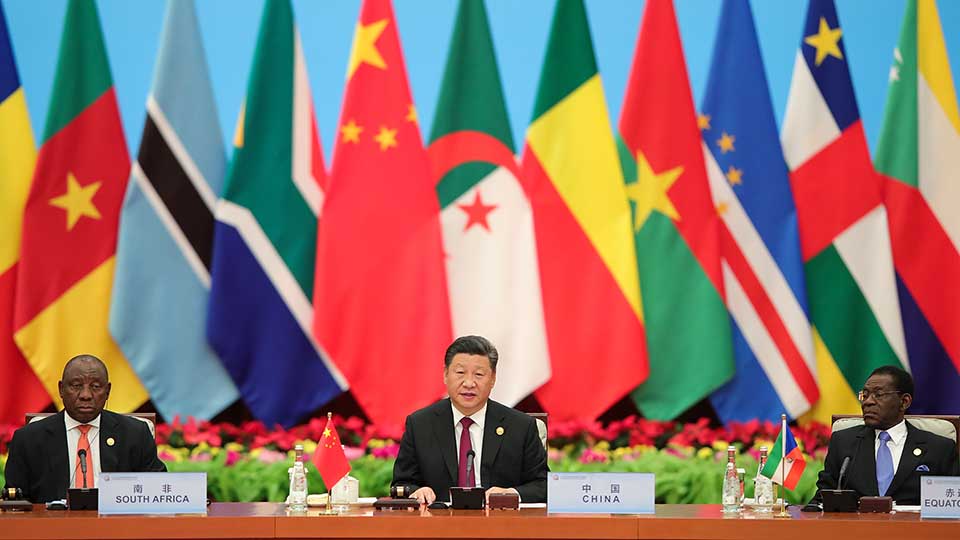
For the United States and its allies, China’s rise from a low-cost manufacturing center to the world’s leading industrial and frontier tech power poses a fundamental challenge to the post-war international order. Intensifying competition over supply chains for critical technologies and strategic sectors reflects a broader struggle to shape the global landscape. For many countries in the global South, China is both an economy-shaping importer and a potential model for sovereign development.
To explore these questions, Phenomenal World editor Maria Sikorski spoke with Xiaoyang Tang, Chair and Professor of the Department of International Relations at Tsinghua University in Beijing and an expert at the China Forum. Their conversation covered China’s development trajectory, the complexities of its state-business relations and their influence on foreign economic engagement, its role in global governance, and its responses to recent geopolitical and geoeconomic shifts.
An interview with Xiaoyang Tang
Maria Sikorski: Outside observers have characterized the Chinese development by contrasting it to the “Washington Consensus.” However, in your writing—including your 2021 book—you challenge the notion of a singular “Beijing consensus” by introducing the idea of coevolutionary pragmatism. What does this concept tell us about China’s own history of development, and its approach to other developing nations?
xiaoyang tang: The Washington Consensus adopted a strict logic of causal mechanisms and attempted to generalize them—it stipulates static variables that should lead to specific results. It identifies a cause-and-effect relationship between factors such as the free market and economic growth.
The Chinese experience suggests that viewing economic development through this analysis is overly simplistic—and that culture, existing economic institutions, historical economic institutions, style of educational system, form of government, and so on, all must move together in a country’s modernization process.
I find that the concept of coevolutionary pragmatism best explains this multidimensional and interactive relationship. The form of government is not a determinant factor in economic growth; it is correlated to it. For the economy to grow, the form of government must fit its current economic conditions, and it must adapt as the economy grows. In this type of multidimensional relationship, there is no fixed model for either the government or the economic structure that leads to development. Instead, you have a pragmatic view on how to adjust different factors operating inside a broader system to seek a better functioning relationship between all of them at each stage of development. In contrast to the prescriptions of the Washington Consensus, the search for the right combination of variables will be dynamic across national contexts and across time.
That is what China has been doing for the last forty or fifty years. Experimentalism and gradual change allowed China to find its fitting combination at each historical period.
MS: How does China’s history shape its approach to international development and finance? What guides Chinese infrastructure projects abroad and economic cooperation through trade and foreign direct investment?
XT: When you talk about international development and finance, infrastructure building, trade, and investment all come down to the question of modernization. All non-Western countries were and are forced to follow the Western path because Western modernization had enormous impacts on productive power, and no country could resist it. China learned this over a century-long period. With the 1978 market reforms, China understood that to modernize itself, it needed to foster economic productivity by operating in the global market and placing a new emphasis on infrastructure and technology. China’s approaches to trade, investment, and infrastructure building are all related to this modernization process—to increase productivity through the world market, there must be enough infrastructure to support commodity, labor, and information flows. This exchange of labor, commodities, and information allows production and the economy to scale up, fostering industrialization, which further stimulates the market to expand. This is what drives the Chinese approach to foreign economic engagement.
MS: Your work has focused on Chinese affairs in Africa. Can you explain how this broad view of Chinese economic development has impacted its activities on the African continent? To what extent has Chinese engagement succeeded in fostering industrial development and structural transformation in Africa, as opposed to merely finding sinks for overcapacity or securing raw materials?
XT: My research on Sino-African relations began with observing economic partnerships on the ground. At the beginning of the twenty-first century, Sino-African economic cooperation grew so much that it attracted worldwide attention from policymakers, economic actors, and researchers, and I was among the first that had a chance to do field research in the region. I went to Africa for the first time in 2007, and have been working on this for almost twenty years.
As the most underdeveloped continent in the world, Africa has considerable potential but faces numerous challenges. Many colonial powers and former superpowers, such as the US and the Soviet Union, worked in Africa with various approaches to their bilateral relationships, but they did little to facilitate African development.
China is now Africa’s number one trade partner; India is number two. This is a story about South-South cooperation broadly, which has to do with the emerging global economic structure. In the twenty-first century, developed economies like Europe and the US share little, if any, common interests with Africa. Their engagement there is limited to providing some aid in exchange for oil and other natural resources.
When China started working with African nations, though natural resources were an important aspect of cooperation, they were not the only factor. China’s very significant investment in the mining sector, for example, is still less than half that of its Western counterparts. Historic diplomatic ties from the period of decolonization have critically informed these partnerships, and Africa’s incipient industrialization can help Chinese growth. Increasing moves from Western governments to decouple from Chinese trade and saturation in domestic markets force China to seek new growth opportunities. If African countries industrialize, they can become powerful economic partners.
China invests in infrastructure, assists local factories to establish processing industries for agriculture and the extractive sectors, invests in capacity building and education, and shares the lessons it has learned from its own experience. In Zambia and Malawi, for instance, China-Africa Cotton Co. not only cultivates cotton but has established textile mills and oilseed extraction plants.1Xiaoyang Tang, “Adaptation, innovation, and industrialization: the impact of Chinese investments on skill development in the Zambian and Malawian cotton sectors,” (<)em(>)Journal of Chinese Economic and Business Studies(<)/em(>) 19:4 (2021): 295–313. DOI: 10.1080/14765284.2021.1943734 A decade ago, China Nonferrous Metals Corporation was already developing a mineral processing industrial zone in Zambia’s Chambishi region to enhance the value of raw copper exports.2Deborah Bräutigam, Xiaoyang Tang, “‘Going Global in Groups’: Structural Transformation and China’s Special Economic Zones Overseas,” (<)em(>)World Development(<)/em(>) 63 (2014): 78–91.
MS: How does the African experience compare to that of other regions in the world where China is conducting economic and diplomatic activities? In the case of Latin America, China is a significant trade partner, but its rapid economic development has also been associated with the “reprimarization” of domestic economies to supply primary products like soya, beef, and raw minerals, and so on.
XT: Latin America is quite different from Africa. The region used to have much more advanced industrial levels than China, but has experienced deindustrialization over the past decades—a process that was underway even before China’s rise. Latin America’s deindustrialization was driven by the adoption of neoliberal policies in the 1980s and 1990s, when countries abandoned the old structuralist approaches to development. These patterns are extremely different from African countries, many of whom have never had advanced levels of industrial activity. Sociopolitical structures also differ dramatically, as does productivity mechanization, and labor relations in the primary sectors like mining and agriculture. The Latin American puzzle is nothing like the industrialization from scratch underway in many African countries—Latin American nations in many cases already have a modern structure, and now, due to policy changes, they want to revive their industrialization.
I would say that China’s engagement with Latin America has accelerated in the past decade because Chinese industrialization has reached a level that matches that of Latin America, surpassing the region in some sectors but not in others—Brazil’s airplane manufacturing sector, for instance, is ahead of China’s. That means both partners can find more opportunities to work together. The electric vehicle sector offers a clear example: China has large productive capacities, and Latin America has huge markets. Chinese investment in the region, such as building EV plants, can help revive Latin America’s industry. Ten years ago, this was simply not possible—China’s auto industry was still at a very low level. Now, having reached a high level, it can afford to invest in projects like the railway connecting Brazil to Peru and the Chancay port, investments that enable Latin America to export even more to Asia, thereby reducing its reliance on the Panama Canal and the US market. I think these are the new trends for China and Latin America. At a more similar industrial level, both regions can now find new complementarities.
MS: When talking about Sino-African and Sino-Latin American relations, you emphasized economic cooperation as the core aspect. How do Chinese state institutions and businesses coordinate or diverge in their foreign engagement approaches? How do Chinese businesspeople and Party officials understand and interpret China’s role in global affairs?
XT: Chinese stakeholders or players cannot be simply divided between public and private ones. In China, there is a lot of competition, even within the so-called public sector. State-owned enterprises like Sinopec and ChinaOil compete with each other; entire provinces compete with each other. Meanwhile, the so-called private sector is not so private. Huawei is one obvious example. It’s a privately-owned company that even tries to distance itself from the Chinese government because of reputational and legal issues abroad. However, the US and other Western governments still see its critical technology as a relevant factor of the Chinese economy, and that shapes how the company operates worldwide. Not only Huawei but Alibaba, Tencent, even BYD—all of them are privately-owned companies, but critical components of the Chinese economic system. Therefore, when these companies invest overseas, for example, they are certainly representing China’s image and contributing to China’s policy.
Take the Belt and Road Initiative (BRI), which has quite a loose and broad strategy. When Chinese companies invest in places like Brazil and Colombia, that can be counted as part of the BRI. This is how complex and diverse the Chinese system is. At the same time, to the outsider observer, Chinese activity is understood as completely unified because all these actors have similar views of development. When the government wants to promote international cooperation, it relies on state- and privately-owned companies to implement its projects, and when they take part in such projects, it means they’re part of Chinese foreign policy. China is a unity with many complexities and diversities; it’s not simply divided by public and private sectors.
MS: In what ways is China simultaneously working within and attempting to reform the existing international order? Both in terms of global governance and its institutions and in terms of trade practices and investment.
XT: China works with a wide range of international institutions, whether they are part of the post-war international order or organizations aimed at reforming global governance. It keeps participating in the UN system to strengthen multilateralism, peace, and security. It is a major shareholder in the IMF and the World Bank—although China is not satisfied with these institutions, as they are obviously promoting Washington-dominated views. It remains a member of the WTO despite trade conflicts and the US’s campaign over recent years to weaken its authority. Still, China is exploring ways to work with Europe and other countries to (hopefully) reinstall the trade order—but with the current US president, there are reasons to be pessimistic about outcomes for the next four years.
China’s goal is to make the whole international environment more favorable to economic development—not only for a small number of advanced countries, but for all of them. Consistent with this coevolutionary pragmatist approach, China engages in efforts to expand the global governance horizon, by joining BRICS, establishing Asian Infrastructure Investment Bank and supporting the Shanghai Cooperation Organization. To reach the goal of economic development, you need different variables working together, which is why China doesn’t have a single, straightforward plan to preserve or reform the existing global order. Instead, pragmatism leads to working within existing institutions while experimenting with new ones. Experimentalism and gradualism also guide this approach to global governance.
MS: How would you characterize China’s evolving foreign policy, particularly toward the global South, in light of dramatic geopolitical and trade conflict? What are the inflection points or lessons learned that will shape China’s next phase of foreign engagement?
XT: For the past twenty years, China has attached a lot of importance to working with the countries of the global South. In 2024, around 34 percent of China’s exports went to BRICS+, Africa, ASEAN, and Central Asian nations—surpassing its exports to the US, Europe, and Japan, which accounted for a combined 32 percent. To a significant degree, the “rest of world” export markets—fostering South-South engagement—can now meet China’s major interests.
Global South countries have common visions, shared histories, and a more equitable and friendly attitude when partnering up, so China finds that it is much easier to keep working with them. South-South relations also have much more potential than North-South ones. The US and Europe today have problems of their own—their economies face challenges, and their political stability is in question. While the global South still has many high-risk regions, several countries have demonstrated stability and a willingness to embrace Chinese foreign investment for common development. Given this scenario, Chinese foreign policy will continue to engage with the global South not only in economic terms but also by fostering mutual trust and encouraging cultural exchanges.
MS: How do you understand China’s responses to US trade restrictions in light of its development strategy?
XT: In Trump’s first term, China’s response to new US tariffs focused on diversifying trade partners. But in his second term, the situation is now different. Trump is no longer targeting just China—at least not yet. He is instead pursuing a full-scale tariff war against all varieties of US economic partners, in order to instrumentalize the chaos and make new bilateral trade deals.
Trump’s strategy assumes the existing order can be disrupted and individual countries can be directly threatened and forced to accept new terms because of the size of the US market. Meanwhile, China wants to use its own case to show the world that it should not be coerced by Trump. China does not fear the trade war, but it is also not close to turning its back on the US. If the US wants to fight, China will take measures in turn. But if they want to negotiate, China is open—as long as it’s an equal negotiation with mutual respect.
The message China wants to send to all other countries, from the Europeans to the global South, is this: Most of us benefit from the global market and depend on it for further growth. The international trade order is what allows us to promote economic productivity and welfare. We will therefore stick to international cooperation. We understand the global order needs adjustments, but they must be done with mutual respect—not a condescending, unilateral attitude.
China wants its actions to illustrate this to the world. And that’s what has been seen in the Geneva negotiations between the Chinese vice-premier and the US Treasury secretary.
Further Reading
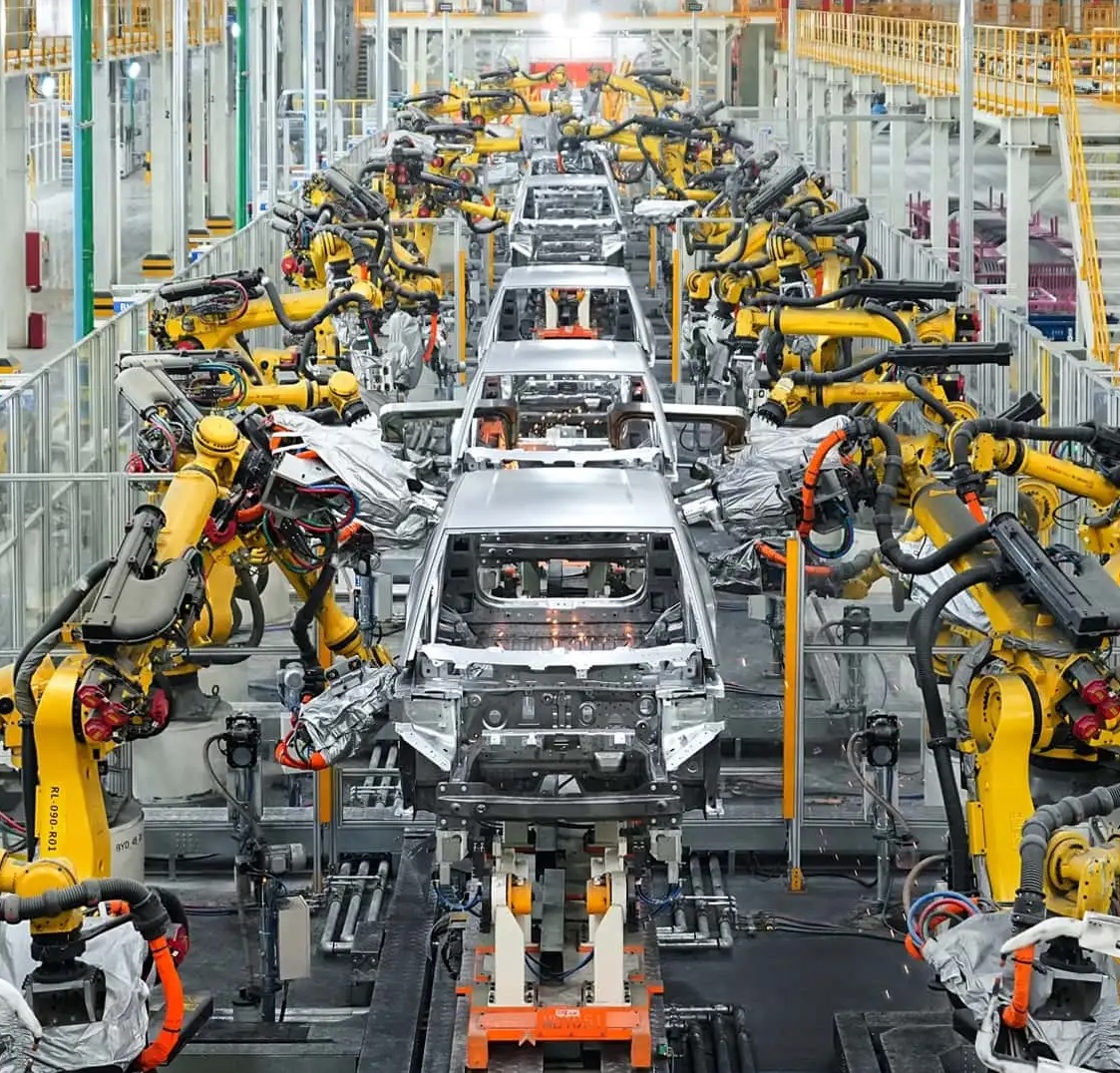
Global BYD
The international expansion of Chinese electric vehicles
Amid the intensifying retreat of American hegemony, an alternative geo-economic and geopolitical arrangement is coming into view: a battery-powered globalization with Chinese characteristics. Chinese EV...

How to DOGE USAID
The Wall Street Consensus under Trump
We often hear that the new Trump administration inaugurates the age of technofeudalism. But the gutting of USAID represents a continuity from the Biden years....

State and Development
Contemporary industrial policy and challenges for the Brazilian economy
The world economy has seen a resurgence of industrial policy in recent decades. National development programs are at the center of a variety of polarizing...